

I hear some version of this story all the time. A woman comes to see me because she is tired, waking up at night, having hot flashes, or struggling to focus. Then she tells me that the belly fat is really getting to her. She never used to have to think this hard about her weight. Now the things that used to work do not seem to work the same way. She feels less comfortable in her body, and she has a lot of questions. Is this hormones? Can anything help? Do I need a GLP-1?
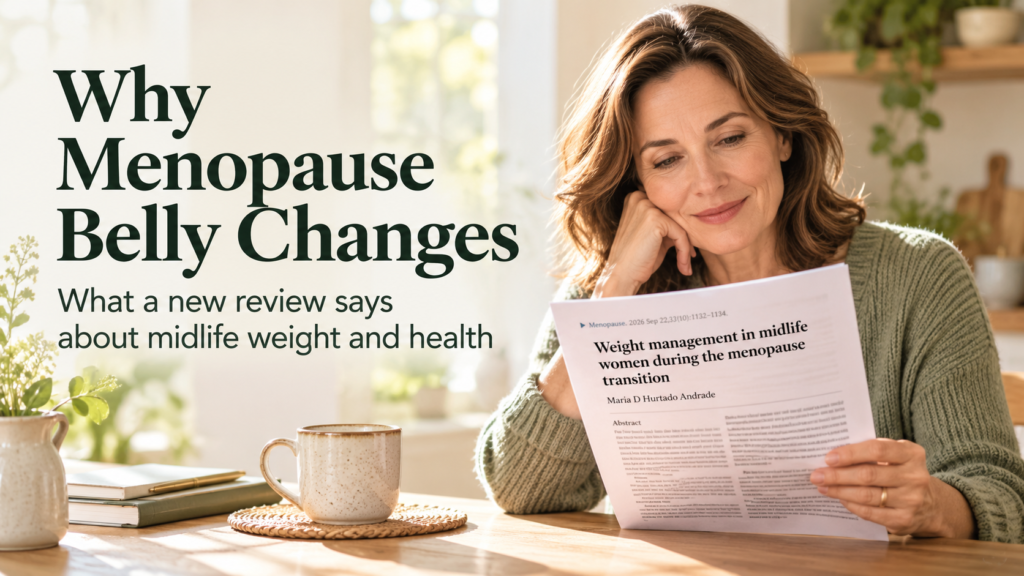
Those are fair questions. A new review in the journal Menopause helps explain what may be going on and what options women can talk through with their health care provider. The review is called “Weight management in midlife women during the menopause transition.” It brings together current research on midlife weight gain, belly fat, muscle, lifestyle care, hormone therapy, and weight-loss treatment.
Is menopause causing all the weight gain
The short answer is no. The review says aging is the main driver of weight gain in midlife. Menopause can also change where the body stores fat. As estrogen levels fall, more fat may collect around the abdomen, including visceral fat, which is fat stored deeper inside the belly around the organs.
Menopause can also add to the loss of lean muscle that happens with age. The review cites findings from the Study of Women’s Health Across the Nation, or SWAN, which found a 2.5-fold increase in fat mass gain and a threefold increase in lean mass loss during the menopause transition, independent of age. These are group findings, not a prediction of what will happen to every woman.
So hormones can be part of the story, but they are not the whole story. Age, muscle, movement, sleep, mood, hot flashes, food choices, and some medications can all affect weight and body composition. This is why blaming yourself usually does not help, and blaming every change on hormones does not give us the full picture either.
Why does belly fat matter beyond clothing size
The review explains that extra visceral fat can raise the risk of heart and metabolic problems, including heart disease and type 2 diabetes. It may also worsen some menopause symptoms, such as hot flashes. That does not mean a change in your waist is a reason to panic. It does mean body changes are worth talking about as part of your overall health.
The authors recommend looking beyond weight or body mass index alone. Waist size and other health measures can help your clinician understand the bigger picture. A good conversation should include how you are feeling, your health history, sleep, symptoms, activity, and any medicines that may affect weight.
Will hormone therapy make the belly fat go away
Hormone therapy is not a weight-loss treatment. The review says it may help limit the increase in abdominal and visceral fat after menopause, but it does not cause weight loss by itself. The review also notes that this benefit can go away when hormone therapy is stopped.
For women who have menopause symptoms, hormone therapy may be an option after an individual discussion of benefits and risks. Treating symptoms may also make it easier for some women to sleep, move, and follow through with healthy habits. But hormone therapy should not be started just to lose weight, and it is not right for everyone.
Do I need a GLP-1 medication
Some women may benefit from prescription weight-loss medication, including GLP-1 medicines. The review describes these as options when lifestyle changes alone are not enough and when a person’s weight, health conditions, goals, and other factors support treatment. The right choice depends on the individual, including possible side effects, cost, and how long treatment may be needed.
The review notes that research focused specifically on midlife and postmenopausal women is still limited. That is one reason a GLP-1 should be a conversation with a qualified clinician, not a decision based only on an ad, a social post, or frustration with your body. Medication can be helpful for some people, but it is not the only path and it does not replace ongoing care.
What can help
The review describes lifestyle care as the foundation of weight management in midlife. That means building a plan around food, movement, and support that fits the person. It highlights enough protein to help protect muscle, a mix of strength training and aerobic activity, and steady behavior support over time.
It also says menopause-related barriers deserve attention. Hot flashes, poor sleep, and mood changes can make healthy routines harder. A clinician can review symptoms and medicines that may affect weight, then help make a plan that feels realistic. Small steps that you can repeat are often more useful than an extreme diet or punishing workout plan you cannot keep up.
The goal does not have to be a smaller waist at any cost. It can include feeling stronger, improving sleep and energy, supporting heart and metabolic health, and feeling more at home in your body. The best plan is one that takes your whole health into account.
Care for women in perimenopause and menopause
At Antigravity Wellness, I provide telemedicine care for women in Washington, Oregon, and Idaho. I work with women to understand their symptoms, health history, and goals, then build an individual care plan. If you are interested in becoming a patient, the first step is to complete our Fit Questionnaire on the Antigravity Wellness website.
I am also working on Perimenopause Belly Slim Down, an educational lifestyle program for women anywhere who want help understanding these changes. It is based on the work I have done one-on-one with perimenopausal and menopausal patients, along with current research and practical steps that have helped women make lasting changes. The program is not medical care and will not replace working with your own clinician. It is meant to help women learn, take action, and feel more prepared to speak up for themselves in the doctor’s office.
The program will be rolling out soon. Follow Antigravity Wellness on Instagram at @antigravitywellness for updates and a behind-the-scenes look at perimenopause and menopause care.
Read the full review
Hurtado Andrade MD. “Weight management in midlife women during the menopause transition.” Menopause. 2026;33(10):1132–1134. doi:10.1097/GME.0000000000002892.
Free full text: https://pmc.ncbi.nlm.nih.gov/articles/PMC13592837/
PubMed record: https://pubmed.ncbi.nlm.nih.gov/42771012/
Medical disclaimer
This article is for education only. It is not personal medical advice, diagnosis, or treatment, and it does not replace care from your own health care provider. Do not start, stop, or change hormone therapy or a weight-loss medication based on this article. Talk with a qualified clinician about your symptoms, health history, and the risks and benefits of your options.