
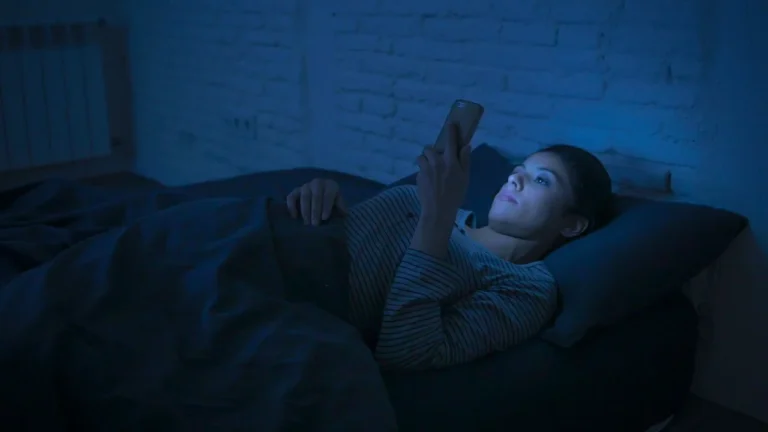
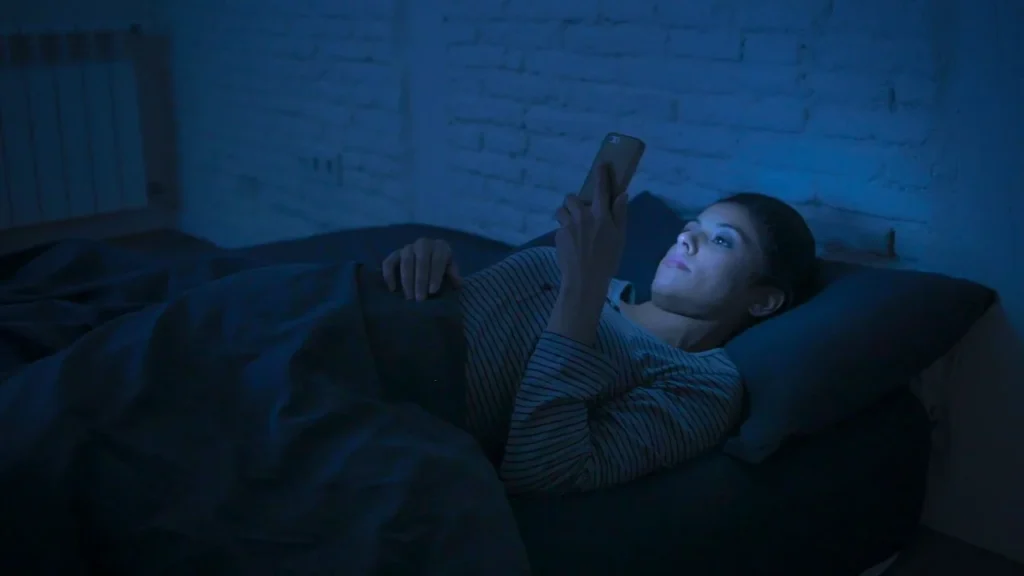
It was a Sunday evening in late October, and Margaret sat curled on the couch, smartphone in hand, under the glow of her living room kitchen lights. She was 51, in the throes of perimenopause—hot flashes, disrupted sleep, a thinning hairline, and that lingering afternoon sense of “I’m done for the day.”
As the evening hours ticked on, she noted that though she should feel winding down, she instead felt oddly alert. At 10:30 pm, she flipped through emails, then switched to her tablet for a reading.
At midnight, she jolted awake with a hot flash, couldn’t get back to sleep, and tossed for another hour. The next day, she dragged through her workout and chalked it up to perimenopause.
But in the back of her mind, she remembered an article she read that talked about the detriments of blue light and wondered: “Could the evening light and screens be making this worse?”
What if, beyond hormones, her internal clock was being thrown off by blue-rich light after sunset? What if managing that could help her sleep, mood, and midlife vitality?
What Is Blue Light & How It Affects the Circadian Rhythm
“Blue light” refers to the short-wavelength portion of visible light (~400-500 nm) that is especially effective at influencing our internal biological clock (circadian rhythm).
Our eyes contain a specialized group of light-sensing cells (intrinsically photosensitive retinal ganglion cells, ipRGCs) that are highly sensitive to blue wavelengths and which signal the brain’s master clock (the Suprachiasmatic nucleus, or SCN) about day versus night. (PMC)
In essence:
- Blue light during the day is good—it supports wakefulness, alertness, and helps reset the clock. (PMC)
- But blue light in the evening/at night signals “daytime” to your brain, suppresses the sleep hormone Melatonin, delays your circadian phase, disrupts sleep onset, and contributes to mood dysregulation and hormone-sensitive fluctuations. (PMC)
For women in perimenopause and menopause who are already experiencing hormonal shifts, sleep disruption, and vulnerability in mood and metabolism, these circadian disturbances from blue light can amplify symptoms.
Why This Matters for Perimenopausal & Menopausal Women
Several intersecting issues make blue-light/circadian rhythm control especially important in midlife women:
- Hormonal fluctuations: During perimenopause and early menopause, estrogen and progesterone levels shift, often resulting in changes to mood, sleep, thermoregulation (e.g., hot flashes), and metabolic regulation. These hormones also influence circadian regulation (for example, women in perimenopause show altered melatonin rhythms). (PMC)
- Sleep disruption: Night sweats, hot flashes, wake-ups are common in this life phase. On top of that, evening blue light further suppresses melatonin and delays sleep onset, making sleep quality worse. (University of Utah Healthcare)
- Mood & metabolic sensitivity: Circadian misalignment (later sleep time, shorter sleep, irregular activity patterns) has been associated with higher rates of depressive symptoms, especially when combined with hormonal transition. (PMC)
- Recovery & training: Good sleep and recovery are essential. A misaligned circadian rhythm can impair recovery, reduce hormonal optimization, and blunt training adaptation.
- Seasonal/context-specific vulnerabilities: Especially in the Pacific Northwest (WA/OR), where daylight is reduced in winter, any additional evening “day-mimicking” light (screens, artificial lighting) can further throw off your internal cues of day vs night.
What the Research Shows
- A 2023 study in Menopause found that in peri-/post-menopausal women with depression, a “phase-advance intervention” (morning bright light + earlier sleep) improved mood by ~70% over 8 weeks and advanced melatonin offset time (i.e., helped shift the clock earlier). (PMC)
- A review of blue light exposure found that even low levels of evening blue light (for example from screens) can suppress melatonin significantly and delay circadian phase more than other wavelengths. (PMC)
- Exposure to nighttime blue-rich light has been linked to increased risk factors for hormone-sensitive cancers (e.g., breast cancer) through melatonin suppression and estrogen increase. (ACOFP ORG)
- As we age, our eyes transmit less blue light (due to lens changes), which might reduce the strength of day-time cues but also render evening blue light more disruptive because the internal rhythm becomes more vulnerable. (PMC)
Practical Measures to Protect & Optimize Your Circadian Rhythm
Here are actionable strategies you can start now to manage evening blue light exposure, protect your rhythm, and support your perimenopausal health:
- Morning natural light exposure: Within 30 minutes of waking, spend 10-20 minutes outside (even on cloudy days) to get blue-rich outdoor light, which helps anchor your clock.
- Evening lighting control: After sunset (especially 2-3 hours before bed):
- Dim overhead lights, use warm-tone bulbs (2700 K or lower) which emit less blue.
- Use “night mode” on devices or apps that reduce blue-light wavelengths (or install blue-light filters).
- Consider blue-light-blocking glasses starting ~2 hours before bedtime.
- Screen hygiene: Limit screen time 1–2 hours before bed. If you must use devices, reduce brightness, use warm mode, hold further away, and ideally raise device so it is not in direct line of sight.
- Consistent sleep-wake schedule: Aim for a regular bedtime and wake time (even on weekends). Anchor your rhythm. This is especially important when menopausal hormones may shift sleep architecture.
- Optimize sleep environment: Dark room, blackout curtains, minimal ambient light, turn off unnecessary lights/devices. Every bit of nighttime blue light counts.
- Use strategic light exposure: If you’re feeling low in the morning or day, morning bright light (natural or artificial) helps. In contrast, avoid bright blue-rich light late in the day.
- Train and recover accordingly: Make sure your heavy training days happen with enough recovery and that you’re aligning your light and sleep cues to support recovery. Your strength training demands good sleep for muscle repair, hormone balance, and performance.
- Monitor symptoms: Start tracking your mood, sleep latency, hot flashes/night sweats, workout recovery, energy. See how changes to evening light and morning light affect these.
- Integrate with hormone/menopause care: Discuss with your clinician how your light exposure and circadian health tie into your hormones (estradiol, progesterone, DHEA, thyroid). Light doesn’t replace hormone care, but it supports it.
Case Study: “Linda”
Linda is 53, resides in Olympia, WA, and has been in perimenopause for ~2 years. Her symptoms: frequent night faults, waking at 2–3 a.m., poor workout recovery (especially with her glutes/quads heavy days), increased anxiety and afternoon mood dips. Her sleep log showed she was scrolling her phone in bed until ~11:45 p.m.
During assessment at our clinic, we noted her melatonin was low on her DUTCH test in addition to being in the perimenopause transition.
The plan:
- Morning: walk outdoors 15 mins immediately after waking at 6 a.m.
- Evening: from 8 p.m. on, switch to warm ambient lighting, install blue-light filter on all screens, wear amber-tinted blue-light blocking glasses after 9 p.m.
- Bedtime set at 10 :30 p.m. consistently, with blackout curtains.
- Continued her training split and optimized nutrition (iron/ferritin, omega-3s, sleep hygiene).
After 6 weeks: She reported falling asleep ~25 minutes faster, fewer night awakenings, gym recovery improved (less DOMS, more energy), and her afternoon slump reduced.
While her hot flashes we finally being relieved with bioidentical hormone replacement, she also noted an overall greater sense of rhythm and resilience. She described it as “Changing how I was living with light was the extra step I needed on top of my hormone therapy to truly shift how I sleep at night and feel during the day.”
Final Thoughts
Blue light isn’t the enemy—it’s part of our natural light cycle—but its timing and context matter greatly, especially during perimenopause and menopause.
For midlife women, managing evening blue light exposure and ensuring robust morning light cues can be a powerful support for sleep, mood, recovery, hormone resilience, and overall vitality.
If you’re a woman in WA or OR interested in seeing whether this integrated model is a fit for you, follow us @antigravitywellness on Instagram and send us a DM “Hormone Help” to get started and access our pre-visit Readiness Questionnaire.
✨ Want to learn how to use light to boost your mood, sleep, and hormones year-round? Download my free Light & Hormone Connection Guide here and discover how small daily changes in light exposure can make a big difference in your energy and wellbeing.
References
- Cajochen C, et al. “The inner clock—Blue light sets the human rhythm.” PMC. 2017. (PMC)
- Parry BL, Meliska CJ, Sorenson DL, et al. “Sleep + Light Interventions that Shift Melatonin Rhythms Earlier Improve Peri- and Post-menopausal Depression: Preliminary Findings.” Menopause. 2023. (PMC)
- University of Utah Health. “Menopause and Melatonin.” 2021. (University of Utah Healthcare)
- Jaynes D, et al. “Nighttime Blue Light Exposure and Breast Cancer.” ACOFP. 2021. (ACOFP ORG)
Medical Disclaimer
This blog post is for educational purposes only and does not constitute medical advice, diagnosis, or treatment. Always consult with your qualified healthcare provider before making changes to your sleep, light exposure habits, hormonal therapy, or lifestyle—especially if you are experiencing perimenopausal or menopausal symptoms, hormone therapy, sleep disorders, or other medical conditions.