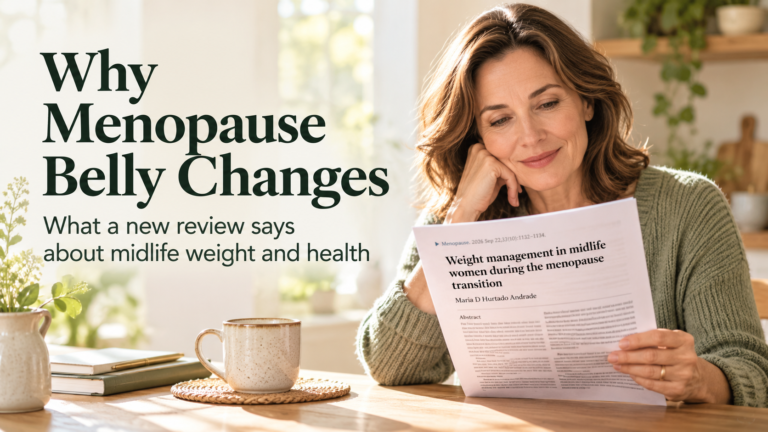




“I’m doing everything right… so why isn’t this working anymore?”
She sat across from me and said something I hear almost every week:
“I don’t eat that much. I work out more than I used to. But I’m gaining weight, I’m exhausted, and I don’t feel like myself anymore.”
She wasn’t lazy.
She wasn’t undisciplined.
She wasn’t “doing it wrong.”
She was in her late 30s—and her body had changed.
If this sounds familiar, you are not alone. And more importantly, nothing is wrong with you.
Why “Eat Less, Move More” Stops Working After 35
For years, women have been told that weight loss is simple:
Eat less food. Move your body more.
That advice can work when you’re younger.
But after about age 35, many women notice:
- Weight gain despite dieting
- More belly fat
- Less energy
- Worse sleep
- Strong cravings
- Slower results (or none at all)
This happens because your body is going through real biological changes, not because you lack willpower.
What’s Actually Changing in Your Body
1. You lose muscle more easily
Muscle is the tissue that helps your body burn calories all day long.
As we age—especially during perimenopause (the transition before menopause)—women naturally lose muscle unless we actively protect it.
If you:
- Eat too little
- Do lots of cardio
- Don’t strength train
Your body often burns muscle first.
👉 Less muscle = slower metabolism.
Metabolism = how your body turns food into energy.
2. Your body becomes more protective
Your body’s #1 job is to keep you alive.
When it senses:
- Not enough food
- Too much exercise
- Poor sleep
- High stress
It adapts by:
- Burning fewer calories
- Holding onto fat
- Increasing hunger
- Lowering energy
This is called metabolic adaptation.
It’s not failure.
It’s survival.
3. Stress hormones play a bigger role
One key hormone is cortisol.
Cortisol = a stress hormone that helps you respond to danger.
Chronic dieting, over-exercise, and poor sleep can raise cortisol, which may:
- Increase belly fat
- Worsen sleep
- Increase cravings
- Make weight loss harder
This is why pushing harder often backfires.
Signs Your Body Needs a Different Approach
Many midlife women notice:
Energy & recovery
- Feeling tired all day
- Sore for days after workouts
Appetite
- Strong evening cravings
- Feeling out of control with food
Body changes
- Scale not moving but clothes tighter
- Loss of strength
- Weight settling around the middle
Sleep & mood
- Trouble falling or staying asleep
- Anxiety or brain fog
These are signals, not personal flaws.
What Works Better for Midlife Women
Instead of shrinking your body, the goal shifts to supporting it.
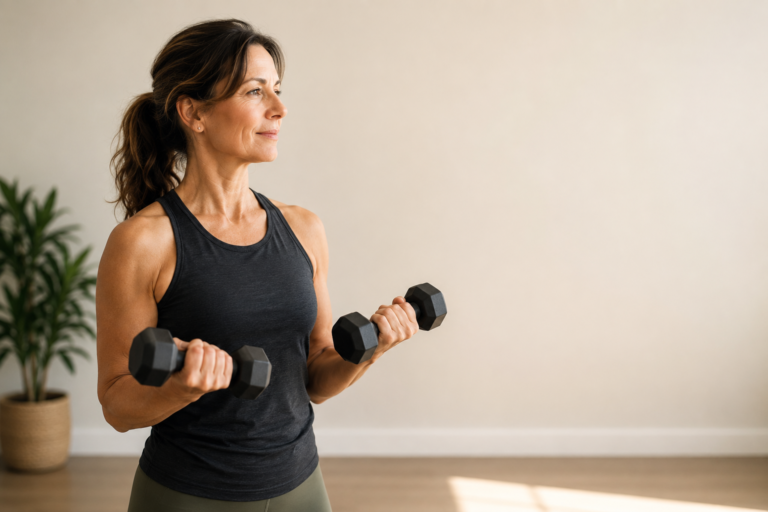
1. Build and protect muscle
Strength training helps:
- Raise metabolism
- Improve body composition (muscle vs fat)
- Support bones and joints
Even 2–4 sessions per week makes a difference.
2. Eat enough—especially protein
Protein helps:
- Build muscle
- Control hunger
- Support blood sugar
Many women feel better aiming for protein at every meal.
3. Move smarter, not harder
Walking, strength training, and short bursts of cardio often work better than endless intense workouts.
More is not always better.
4. Prioritize sleep and recovery
Poor sleep makes fat loss harder and cravings stronger.
Sleep is not a luxury—it’s treatment.
A Real-Life Case Study
Name & details changed for privacy purposes
Michelle, age 42, came to Antigravity Wellness feeling:
- Exhausted
- Puffy and inflamed
- Frustrated with weight gain
She was eating very little and doing cardio almost daily.
We shifted her plan:
- Added strength training
- Increased protein
- Reduced cardio
- Focused on sleep and recovery
Within weeks, she noticed:
- Better energy
- Fewer cravings
- Improved sleep
- Inches lost—even before the scale changed
Her body didn’t need more discipline.
It needed the right support.
How Antigravity Wellness Helps
At Antigravity Wellness, we don’t use one-size-fits-all plans.
Our care packages focus on:
- Understanding your symptoms
- Reviewing your health history
- Supporting hormones, metabolism, and recovery
- Creating a plan that works with your body—not against it
Depending on your needs, care may include:
- Lifestyle and nutrition guidance
- Strength and movement strategies
- Functional lab testing (when appropriate)
- Hormone evaluation for WA and OR residents
- Ongoing coaching and support
Ready to Take the First Step?
The first step is simple and pressure-free.
👉 Complete our Readiness Questionnaire here
This helps us understand:
- Your goals
- Your symptoms
- Whether we’re the right fit for you
From there, we’ll guide you on next steps.
Final Thoughts
If “eat less, move more” isn’t working anymore, that doesn’t mean you failed.
It means your body is asking for a smarter approach.
Midlife is not the beginning of decline.
It’s the beginning of understanding.
Medical References
- North American Menopause Society (NAMS): Lifestyle and weight management in midlife women. https://menopause.org/wp-content/uploads/press-release/weight-management-in-midlife.pdf
- Rosenbaum M, Leibel RL. Adaptive thermogenesis and weight loss. https://pubmed.ncbi.nlm.nih.gov/20935667/
- Protein intake and exercise for optimal muscle function with aging. https://www.espen.org/files/PIIS0261561414001113.pdf
- Westcott WL. Resistance training is medicine: effects of strength training on health. https://pubmed.ncbi.nlm.nih.gov/22777332/
- E T Poehlman et al. Changes in energy expenditure during menopause. https://pubmed.ncbi.nlm.nih.gov/9894924/
Medical DisclaimerThis blog is for educational purposes only and is not medical advice.
It does not replace care from your personal healthcare provider.
Always consult a qualified clinician before starting new nutrition, exercise, supplement, or hormone therapies—especially if you have medical conditions or take prescription medications.