A Story You May Recognize
She sat across from me and said,
“I feel like I’m doing everything right… but nothing is working.”
Her kitchen counter was covered in supplement bottles.
Magnesium. Ashwagandha. A menopause blend. A sleep blend.
Half of them she bought online.
Some from big-box stores.
Some from social media ads.
She wasn’t lazy.
She wasn’t doing it wrong.
She was confused—and honestly, exhausted.
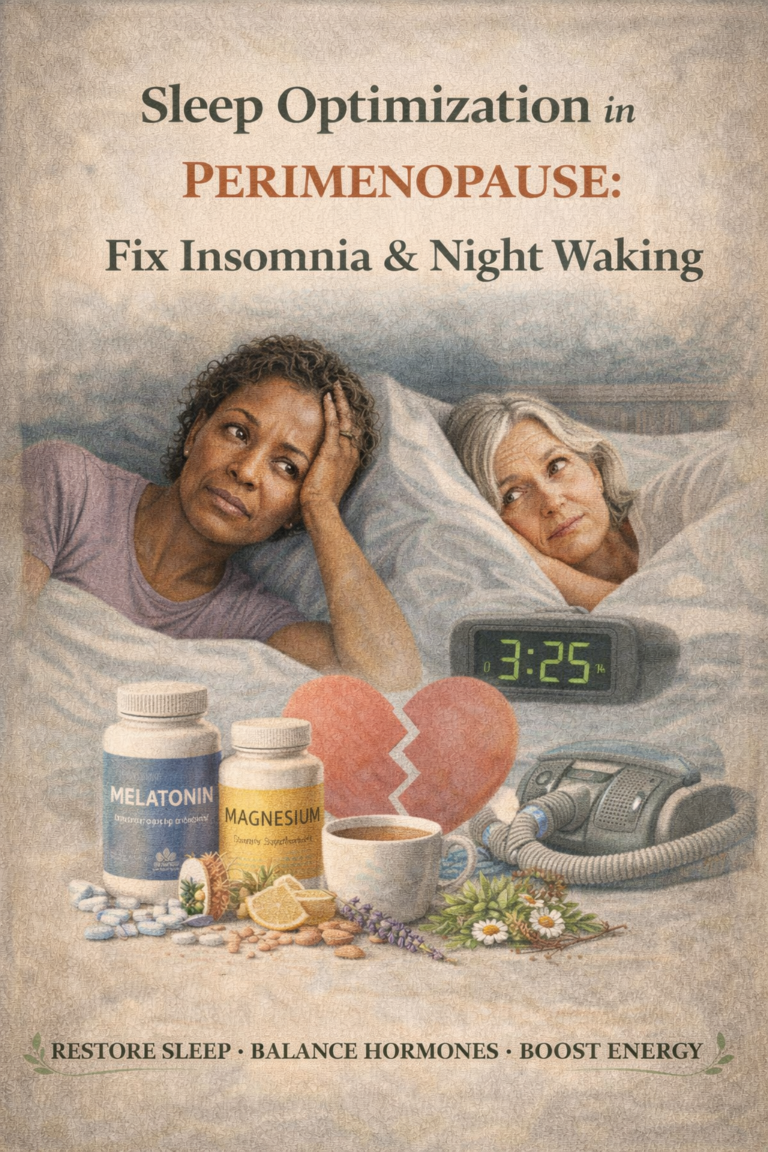
This is what perimenopause looks like for many women.
What Is Perimenopause?
Perimenopause is the phase before menopause when hormones begin to shift.
Your ovaries start to make estrogen and progesterone unevenly.
Some days are high.
Some days are low.
These hormone swings can cause:
- Fatigue (low energy)
- Trouble sleeping
- Anxiety or mood changes
- Weight gain
- Brain fog
- Irregular periods
This phase can last 5–10 years, and during this time, your body’s nutrient needs change.
Why Supplements Can Help (and Why They Often Don’t)
Supplements are meant to support the body, not replace it.
In perimenopause, supplements may help by:
- Filling nutrient gaps
- Supporting sleep and stress
- Supporting bones, brain, and heart health
But many women run into problems because:
- They take too many at once
- The dose is too low to work
- The supplement quality is poor
- The supplement doesn’t match their body’s needs
This leads to frustration and wasted money.
Supplements That Often Matter in Perimenopause
These are some of the most commonly helpful supplements when chosen correctly:
- Magnesium – helps calm the nervous system and support sleep
- Vitamin D – supports mood, immunity, and bone health
- Omega-3 fatty acids – support brain and heart health
- B-vitamins – help with energy and nerve function
- Iron (only if deficient) – supports oxygen delivery and energy
Important: Not everyone needs all of these. Some women need none.
This is why personalization matters.
A Real-Life Case Study
Sarah, age 42, came to us feeling:
- Tired all day
- Wired at night
- Anxious for “no reason”
- Gaining weight despite eating well
She was taking 9 supplements daily.
After reviewing her history and labs, we found:
- Low vitamin D
- Low iron from heavy periods
- High stress hormone output
We simplified her plan to 3 targeted supplements, adjusted her timing, and supported her stress response.
Within 8 weeks:
- Sleep improved
- Anxiety decreased
- Energy returned
- She stopped “supplement hopping”
Less was more—because it was right for her.
Where Most Women Get Stuck
The biggest problem isn’t supplements.
It’s:
- Not knowing what you need
- Not knowing how much
- Not knowing where to buy quality products
- Not knowing when to stop or change them
Perimenopause is not a one-size-fits-all phase.
How Antigravity Wellness Helps
At Antigravity Wellness, we don’t guess.
Our care packages focus on:
- Root-cause assessment
- Symptom patterns
- Lab testing when appropriate
- High-quality supplements only when needed
We also provide access to our professional-grade Fullscript Dispensary, so you know:
- Supplements are real
- Stored properly
- Delivered safely
- Backed by science
And yes—our patients receive 10% off year-round, plus seasonal sales.
How to Take the First Step
If you’re wondering:
- “Do I actually need supplements?”
- “Am I taking the right ones?”
- “Is this perimenopause?”
Your next step is simple.
👉 Start with our Readiness Questionnaire
This helps us understand where you are and whether working together is the right fit.
Readiness Questionnaire Link Here
No pressure.
Just clarity.
Medical References
- Cleveland Clinic. Perimenopause. https://my.clevelandclinic.org/health/diseases/21608-perimenopause
- Harvard Health Publishing. Menopause Supplements: What Works and What Doesn’t. https://www.health.harvard.edu/womens-health/menopause-supplements-effective-relief-or-empty-promises
- NIH Office of Dietary Supplements. Magnesium, Vitamin D, Omega-3, Iron. https://ods.od.nih.gov/factsheets/list-all/
- Mayo Clinic. Perimenopause Overview. https://www.mayoclinic.org/diseases-conditions/perimenopause/symptoms-causes/syc-20354666
- ACOG Practice Bulletins on Menopause and Midlife Health. https://www.acog.org/clinical/clinical-guidance/practice-bulletin/articles/2014/01/management-of-menopausal-symptoms
Medical DisclaimerThis blog is for educational purposes only and is not intended to diagnose, treat, or replace medical care. Supplements and hormone needs vary by individual. Always consult a qualified healthcare provider before starting or changing supplements or medications.