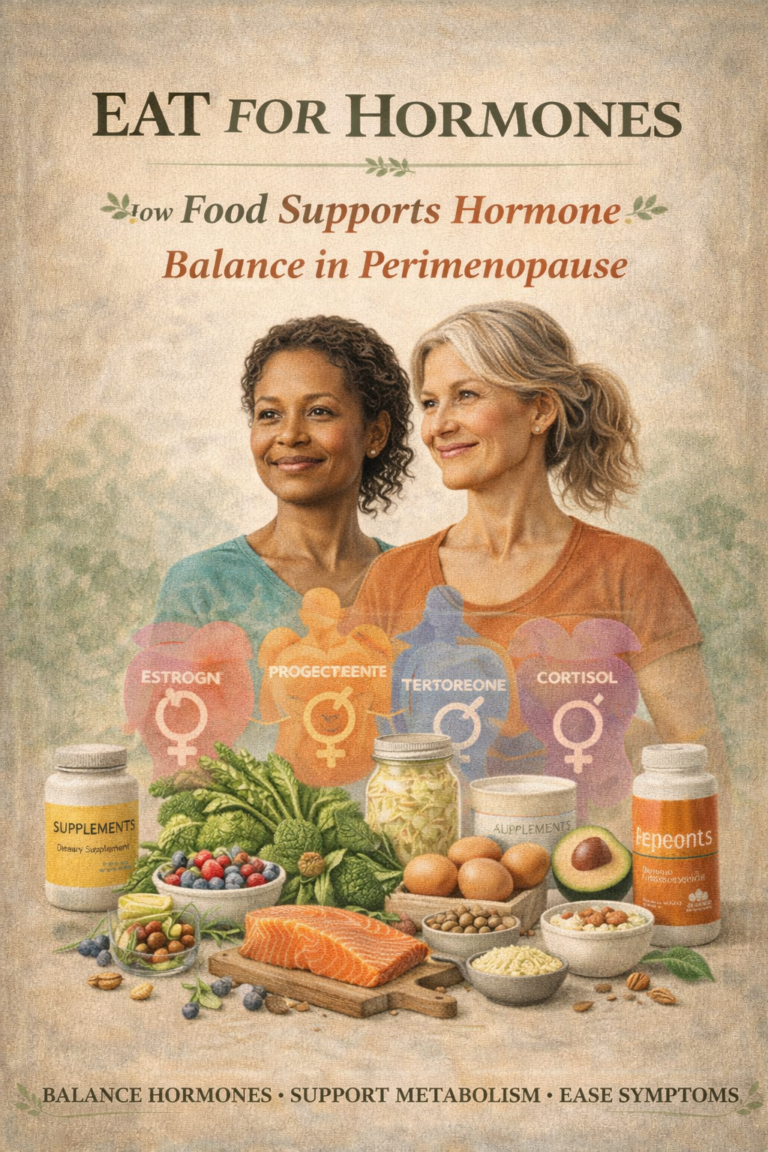
How Food Supports Hormone Balance in Perimenopause
She Was “Doing Everything Right”… But Still Felt Off
She opened her fridge, sighed, and thought, “I don’t understand what I’m doing wrong.”
She was eating clean.
She was exercising.
She was taking supplements.
And yet—she felt exhausted by mid-afternoon, bloated after meals, moody for no clear reason, and frustrated by weight gain that didn’t make sense.
When she came into my clinic, she said something I hear all the time:
“I feel like my body stopped responding.”
The truth?
Her body wasn’t broken.
Her hormones were asking for different support.
Why Food Matters for Hormones (Especially in Midlife)
Hormones are chemical messengers. They help control things like:
- Energy
- Mood
- Weight
- Sleep
- Menstrual cycles
But hormones don’t work alone.
They rely on:
- Blood sugar (how stable your energy is after eating)
- The gut (where hormones are processed and recycled)
- The liver (which helps remove extra hormones)
- Nutrients (vitamins, minerals, protein, and fats)
In perimenopause, hormone levels fluctuate, not just decline. That makes your body more sensitive to stress, skipped meals, and under-fueling.
Food becomes a regulator, not just fuel.
Common Symptoms Food Can Influence
Many hormone symptoms are made worse by unstable nutrition patterns, including:
- Fatigue or energy crashes
- Sugar cravings
- Anxiety or irritability
- Poor sleep
- Weight gain (especially around the belly)
- Brain fog
- PMS getting worse over time
This doesn’t mean food “fixes everything”—but it can dramatically reduce the load on your system.
The Core Hormone-Balancing Food Principles
1. Protein at Every Meal
Protein is made of amino acids. These are the building blocks for:
- Hormones
- Muscles
- Brain chemicals that affect mood
Low protein intake can lead to:
- Blood sugar crashes
- Increased cravings
- Muscle loss (which slows metabolism)
Simple goal:
Include a protein source every time you eat.
Examples:
- Eggs
- Chicken or turkey
- Greek yogurt
- Tofu or tempeh
- Protein smoothies
2. Fiber Supports Estrogen Balance
Fiber helps your body get rid of extra estrogen.
If fiber is low:
- Estrogen can be re-absorbed instead of eliminated
- Symptoms like bloating, PMS, and weight gain can worsen
High-fiber foods include:
- Vegetables (especially broccoli, kale, cauliflower)
- Berries
- Beans and lentils
- Chia and flaxseed
3. Healthy Fats Help Make Hormones
Hormones are made from fat and cholesterol.
Very low-fat diets can make symptoms worse.
Helpful fats include:
- Olive oil
- Avocado
- Nuts and seeds
- Fatty fish
- Ground flaxseed
4. Blood Sugar Balance Is Key
Blood sugar refers to how much sugar is in your bloodstream after eating.
Big spikes and crashes can increase:
- Cortisol (your stress hormone)
- Inflammation
- Fat storage
Simple ways to stabilize blood sugar:
- Don’t eat carbs alone
- Pair carbs with protein and fat
- Eat regularly instead of skipping meals
Simple Meal Examples (Real Life Friendly)
Breakfast
- Eggs with vegetables and avocado
- Greek yogurt with berries and flax
- Protein smoothie with spinach and nut butter
Lunch
- Big salad with protein and olive oil dressing
- Leftovers with protein, veggies, and carbs
Dinner
- Sheet-pan chicken or salmon with vegetables
- Stir-fry with tofu or beef and mixed veggies
Case Study: When Food Becomes the Missing Link
Patient: 44-year-old woman in early perimenopause
Symptoms: fatigue, sugar cravings, weight gain, anxiety
She was eating “healthy” but:
- Skipping breakfast
- Under-eating protein
- Eating carbs alone
- Training fasted under high stress
Changes we made:
- Protein at every meal
- Regular meal timing
- Added fiber and healthy fats
- Reduced fasting and stress load
Results (within weeks):
- More stable energy
- Fewer cravings
- Improved mood
- Better sleep
Food didn’t “fix” everything—but it removed a major barrier to healing.
How Antigravity Wellness Supports Hormone Health
At Antigravity Wellness, we don’t hand out one-size-fits-all plans.
Our care packages include:
- Comprehensive hormone evaluation
- Nutrition guidance tailored to symptoms and labs
- Functional testing when appropriate
- Lifestyle and stress support
- Ongoing accountability and adjustments
Food is always the foundation, not an afterthought.
How to Take the First Step
If you’re tired of guessing and want clarity, the first step is simple.
👉 Complete our Readiness Questionnaire
(This helps us understand your symptoms, goals, and whether we’re the right fit.)
Medical References
- B R Goldin. The effect of dietary fat and fiber on serum estrogen concentrations in premenopausal women under controlled dietary conditions. https://pubmed.ncbi.nlm.nih.gov/8039147/
- Paddon-Jones D et al. Protein, muscle, and aging. Am J Clin Nutr. https://pubmed.ncbi.nlm.nih.gov/25926511/
- Hall KD et al. Ultra-processed foods and metabolic health. Cell Metabolism. https://pubmed.ncbi.nlm.nih.gov/31105044/
- Stuenkel CA et al. Treatment of Symptoms of the Menopause: An Endocrine Society Clinical Practice Guideline. https://pubmed.ncbi.nlm.nih.gov/26444994/
- Wendy R. Russell. Impact of Diet Composition on Blood Glucose Regulation. https://www.tandfonline.com/doi/full/10.1080/10408398.2013.792772
Medical Disclaimer
This content is for educational purposes only and is not intended to diagnose, treat, or replace medical care. Individual needs vary. Always consult a qualified healthcare provider before making medical or dietary changes.