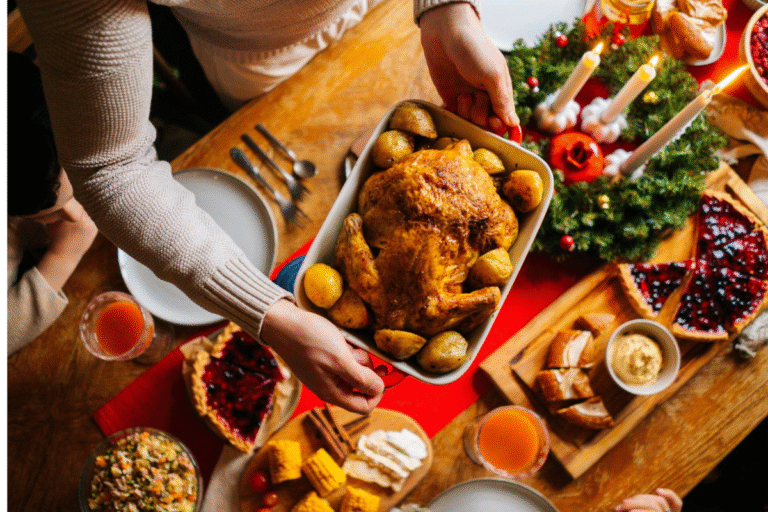
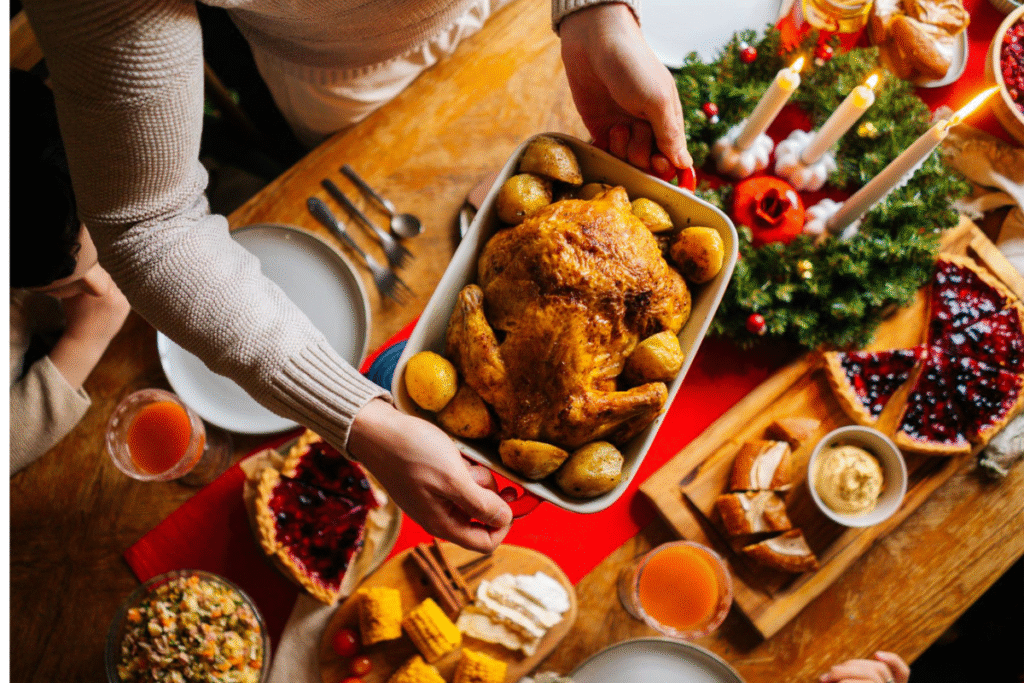
The holiday season is supposed to be joyful. But for many women, it’s a source of anxiety that derails their health, disrupts their routines, and leaves them starting January with 10-15 extra pounds and a mountain of guilt.
Does this sound familiar?
You skip breakfast to “save calories” for the party later. You arrive at the event starving and load up on appetizers and wine. You tell yourself you’ll “get back on track in January.” You avoid the scale because you don’t want to know. And you spend the entire season feeling out of control around food.
But then January rolls around, and you’re exhausted. You’ve gained weight. Your clothes don’t fit. You feel worse than you did in November. And now you’re starting the new year from a deficit instead of a place of strength.
Here’s the truth: The holidays don’t ruin your health. The way you approach them does.
And I’m going to show you exactly how to change that.
The Holiday Weight Gain Trap: What’s Really Happening in Your Body
When I founded Antigravity Wellness, it was out of frustration with Western Medicine’s focus on sick care instead of prevention and wellness. I watched too many women suffer through perimenopause and menopause symptoms—only to be handed a prescription and sent on their way. No investigation. No partnership. No real solutions.
One of the most common patterns I see in my practice is what I call the “holiday weight gain trap.” Women come to me in early January looking completely defeated. They’ve gained 10-15 pounds, their energy is tanked, their clothes don’t fit, and they feel like they’ve lost all control.
When I ask what happened, they say: “The holidays.”
But here’s what I’ve learned: The holidays don’t ruin your health. The way you approach them does.
Let me introduce you to Maria, a composite of many of my patients. Maria is a 48-year-old woman navigating perimenopause. She came to see me in early January looking completely defeated.
She’d spent six weeks trying to enjoy the holidays while “being good.” She skipped meals to save calories. She arrived at parties starving and ate everything in sight. She drank wine at every event because “it’s the holidays.” She told herself she’d start fresh in January.
But here’s the thing: her body didn’t wait until January.
By the time she came to see me, she’d gained 12 pounds, her sleep was destroyed, her hot flashes were worse, and she was in full-blown hormonal chaos.
Understanding Holiday Weight Gain: It’s Not Just About Calories
To understand what’s happening during holiday weight gain, we need to talk about what’s really going on in your body.
Most people think weight gain is simple: calories in versus calories out. Eat too much, gain weight. Eat less, lose weight.
But that’s not the whole story—especially for women over 35 navigating perimenopause or menopause.
Here’s what’s really happening during the holidays:
Blood Sugar Chaos: You skip meals, then overeat at parties. Your blood sugar spikes and crashes. This triggers insulin release, which tells your body to store fat—especially around your midsection.
Hormonal Disruption: Alcohol, sugar, and stress disrupt your hormones. Estrogen and progesterone get out of balance. This makes hot flashes worse, sleep worse, and weight gain worse.
Metabolic Slowdown: When you restrict calories during the day and binge at night, your metabolism slows down. Your body thinks you’re starving, so it holds onto every calorie.
Inflammation: Holiday foods—sugar, alcohol, processed foods—trigger inflammation. Inflammation makes it harder to lose weight and easier to gain it.
Sleep Disruption: Late nights, alcohol, and stress destroy your sleep. When you don’t sleep, your hunger hormones (ghrelin and leptin) get out of balance. You crave more sugar and carbs, and you eat more overall.
Your body literally can’t tell the difference between holiday chaos and a real metabolic threat. It just knows: stress plus sugar plus alcohol plus no sleep equals store fat.
And that’s why so many women gain weight during the holidays—even when they’re “trying to be good.”
The Good News: You Can Interrupt This Cycle
But here’s the good news: You don’t have to choose between enjoying the holidays and maintaining your weight.
You can have both.
You can enjoy the parties, the food, the wine, the time with family—and still take care of yourself.
It starts with seven science-backed strategies that will help you balance your blood sugar, support your hormones, maintain your energy, and actually enjoy the season—without telling yourself you’ll “start fresh in January.”
Strategy 1: Master the Plate Method (Enjoy Everything Without Overeating)
The Problem: You restrict all day to “save calories,” then you arrive at the party starving. You load up on appetizers, bread, and desserts. You feel out of control. Your blood sugar spikes and crashes, leaving you exhausted and craving more.
The Solution: Use the Plate Method. This lets you enjoy all your favorite foods without overeating or tracking calories.
Here’s how it works:
Step 1: Fill half your plate with vegetables. Roasted Brussels sprouts, green beans, salad, roasted carrots. These are high in fiber, which stabilizes blood sugar and keeps you full.
Step 2: Add a palm-sized portion of protein. Turkey, ham, salmon, beef, chicken, tofu. Protein keeps you satisfied and prevents blood sugar crashes.
Step 3: Add a small portion of healthy fat. Olive oil on your salad, butter on your vegetables, nuts, avocado. Fat slows digestion and keeps you full longer.
Step 4: Add a small portion of carbs. Stuffing, mashed potatoes, rolls, dessert. Yes, you can have them. Just keep the portion reasonable and eat them last—after the protein, vegetables, and fat.
The key: Eat in this order. Protein and vegetables first. Then carbs and desserts. This keeps your blood sugar stable and prevents overeating.
Action Step for This Week: Practice the Plate Method at your next holiday meal. Notice how you feel two hours later. I bet you’ll feel more satisfied, more energized, and less hungry.
Strategy 2: The Pre-Party Protein Trick (Arrive in Control, Not Starving)
The Problem: You skip meals to “save calories” for the party. You arrive starving. You eat everything in sight. You feel out of control and guilty.
The Solution: Eat a small, protein-rich snack 30-60 minutes before the party.
Here are some pre-party snack ideas:
• A handful of nuts (almonds, cashews, walnuts)
• A hard-boiled egg
• Greek yogurt with berries
• Turkey or chicken slices with cheese
• A protein shake
• Veggies with hummus or guacamole
Why this works: Protein stabilizes your blood sugar, reduces cravings, and helps you arrive at the party in control—not starving. You’ll make better choices, eat less overall, and enjoy the food without guilt.
Action Step for This Week: Before your next holiday event, eat a small protein snack. Notice how you feel when you arrive. Notice what you choose to eat. Notice how much you eat.
Strategy 3: The Alcohol Truth (Why Wine Sabotages Your Weight More Than Dessert)
The Problem: You drink wine at every holiday event. You think it’s “just a few drinks,” but it’s wrecking your sleep, your hormones, and your weight loss.
The Truth: Alcohol impacts your weight more than dessert. Here’s why:
Alcohol stops fat burning. When you drink, your liver prioritizes metabolizing alcohol over burning fat. This means fat burning stops for 12-24 hours after drinking.
Alcohol disrupts sleep. Even one drink reduces deep sleep by 20-30%. When you don’t sleep well, your hunger hormones get out of balance. You crave more sugar and carbs the next day.
Alcohol lowers inhibitions. After a drink or two, you’re more likely to overeat, skip your workout, and make choices you wouldn’t normally make.
Alcohol is inflammatory. It disrupts your gut microbiome, triggers inflammation, and makes it harder to lose weight.
The Solution: Set a limit before you go out. Decide how many drinks you’ll have, and stick to it.
Your Alcohol Guidelines:
• Set a limit: 1-2 drinks max
• Choose wine or spirits over sugary cocktails
• Drink one glass of water between each alcoholic drink
• Eat food with your drink to slow absorption
• Take at least 2 alcohol-free days per week
Action Step for This Week: If you’re drinking this holiday season, set your limit now. Write it down. Tell someone. Commit to it.
Strategy 4: The 10-Minute Movement Secret (The Trick That “Cancels Out” Big Meals)
The Problem: You eat a big holiday meal and feel sluggish, bloated, and guilty. Your blood sugar spikes, and you crash hard.
The Solution: Take a 10-minute walk after meals. This simple habit reduces blood sugar spikes by 30% and helps your body process the meal more efficiently.
Why this works: When you move after eating, your muscles use glucose for energy instead of storing it as fat. This stabilizes your blood sugar, improves digestion, and prevents the post-meal crash.
Your Post-Meal Movement Ideas:
• A 10-minute walk around the neighborhood
• A family walk after dinner
• Dancing in the kitchen while cleaning up
• Gentle stretching or yoga
• Playing with your kids or pets outside
The key: Move because it feels good, not to punish yourself or “earn” your food. Movement is a gift you give your body, not a punishment.
Action Step for This Week: After your next big meal, take a 10-minute walk. Notice how you feel. Notice your energy, digestion, and mood.
Strategy 5: The Mindset Shift (Stop the Guilt and Binge-Restrict Cycle)
The Problem: All-or-nothing thinking sabotages you. You tell yourself, “I’ll start in January,” so you abandon your health for six weeks. Then you feel terrible and start the cycle all over again.
The Solution: Progress over perfection. One good choice is still a win.
Here are some mindset shifts I want you to practice:
Instead of: “I ruined my diet with one cookie”
Say: “I enjoyed a treat and I’m getting back on track at my next meal”
Instead of: “I don’t have time to take care of myself”
Say: “I’m prioritizing my health because I matter”
Instead of: “I’ll start in January”
Say: “I’m taking care of myself starting today”
Instead of: “I have no willpower”
Say: “I’m making choices that support my health and my goals”
The key: You don’t have to be perfect. You just have to keep showing up. One good choice is a win.
Action Step for This Week: Pick one mindset shift that resonates with you. Write it on a sticky note. Put it where you’ll see it every day—your bathroom mirror, your car dashboard, your phone lock screen.
Strategy 6: Set ONE Boundary (Protect Your Health Without Guilt)
The Problem: You say yes to everything. You host the party, you bake the cookies, you attend every event. You’re exhausted, stressed, and overwhelmed. And your health suffers.
The Solution: Choose ONE thing to say no to this season. Just one.
Here are some permission slips I want to give you right now:
• You have permission to buy the cookies. Homemade isn’t always better. Your kids will survive. Your guests will survive.
• You have permission to skip one event. Rest is productive. You don’t have to go to everything you’re invited to.
• You have permission to delegate. Ask your partner to wrap the gifts. Ask your kids to help clean. Ask someone else to bring the side dish.
• You have permission to say no to hosting. Someone else can do it this year.
Here’s what I need you to hear: Your worth is not measured by how much you do.
You are not a better mom, a better wife, a better friend because you do everything yourself.
Action Step for This Week: Think of ONE thing you’re going to say no to this season. Just one. Write it down. Tell someone. Commit to it.
Strategy 7: Prioritize Sleep Over Perfection (Your Secret Weight Loss Weapon)
The Problem: You stay up late wrapping gifts, baking cookies, cleaning the house. Your sleep gets destroyed. And when your sleep gets destroyed, your metabolism tanks, your cravings go through the roof, and you gain weight.
The Solution: Seven to eight hours of quality sleep is non-negotiable.
Here’s why sleep matters for weight loss:
Sleep regulates hunger hormones. When you don’t sleep, ghrelin (your hunger hormone) goes up and leptin (your fullness hormone) goes down. This makes you hungrier and less satisfied after eating.
Sleep supports fat burning. Your body burns fat while you sleep. When you don’t sleep, your metabolism slows down and you store more fat.
Sleep balances hormones. Sleep is when your body produces progesterone, balances estrogen, and regulates cortisol. When you don’t sleep, your hormones get out of balance—and this makes weight gain worse.
Your Sleep Protection Protocol:
• Set a bedtime alarm 30 minutes before you want to be asleep
• Dim the lights after dinner to support melatonin production
• No screens in bed—blue light suppresses melatonin
• Keep your room cool (65-68°F is ideal for deep sleep)
• Avoid alcohol within 3 hours of bedtime
Action Step for This Week: Pick ONE sleep habit to implement. Just one. Start there.
Your 2-Week Action Plan
Here’s how to make this real:
Week One:
• Practice the Plate Method at one mea
l• Eat a protein snack before your next party
• Set your alcohol limit and commit to it
• Take a 10-minute walk after one meal
Week Two:
• Write down your mindset shift and put it somewhere visible
• Choose ONE boundary to set this season
• Implement one sleep habit
• Continue practicing the Plate Method and pre-party protein trick
That’s it. Two weeks. Seven strategies.
You can do this.
Get Your FREE Lean Holiday Guide
I know we covered a lot, and you might be thinking, “How am I going to remember all of this?”
Don’t worry. I’ve got you covered.
I’ve created a FREE Lean Holiday Guide that includes all seven strategies in detail, meal plans, action plans, checklists, food lists, mindset shifts, and holiday scenario guides.
It’s your complete roadmap to a healthy, guilt-free holiday season.
Get your Lean Holiday Guide here
About Dr. Nicole Smith & Antigravity Wellness
Hi, I’m Dr. Nicole Smith, DNP, ARNP (WA & OR), FNP-C, ONP-C, MSCP. I’m the founder of Antigravity Wellness and a board-certified Family Nurse Practitioner and Orthopedic Nurse Practitioner with a Doctorate of Advanced Nursing Practice.
I’m also a certified personal trainer and nutritionist with advanced training in functional medicine, hormone health, metabolism, and women’s wellness. I’ve completed advanced practice courses in women’s hormone health, DUTCH testing, GI MAP, advanced functional medicine, and men’s hormone health.
My own health journey started back in 2006 when I lost 45 pounds through lifestyle changes. I learned firsthand how powerful nutrition, movement, and hormone balance are for transforming your health. I even competed in bodybuilding, which taught me so much about what the body is capable of when you give it what it needs.
But here’s what really drives me: I founded Antigravity Wellness out of frustration with Western Medicine’s focus on sick care instead of prevention and wellness.
I watched too many women suffer through hot flashes, weight gain, brain fog, and exhaustion—only to be handed a prescription and sent on their way. No investigation. No partnership. No real solutions.
I’ve spent years studying metabolism, insulin resistance, thyroid and adrenal disorders, hormone health, and the impact of nutrition and lifestyle on the body. And I’ve seen what happens when women finally get the support they deserve.
At Antigravity Wellness, I offer personalized functional medicine care, comprehensive lab testing, and ongoing support to help you feel like yourself again. I specialize in perimenopause, menopause, hormone replacement therapy, weight loss, and nutrition counseling.
Ready to feel like yourself again?
Take our Readiness Questionnaire to see if Antigravity Wellness is a good fit for your health goals.
Key Takeaways
• The holidays don’t ruin your health—the way you approach them does. You don’t have to choose between enjoying the season and maintaining your weight.
• The Plate Method works at every holiday party. Fill half your plate with vegetables, add protein, add healthy fat, then add carbs. Eat in this order.
• Never arrive at a party starving. Eat a small protein snack 30-60 minutes before. This keeps you in control and prevents overeating.
• Alcohol impacts your weight more than dessert. It stops fat burning for 12-24 hours, disrupts sleep, and triggers inflammation. Set a limit and stick to it.
• A 10-minute walk after meals reduces blood sugar spikes by 30%. This simple habit helps your body process food more efficiently.
• Progress over perfection. One good choice is a win. You don’t have to be perfect—you just have to keep showing up.
• Sleep is your secret weight loss weapon. Seven to eight hours of quality sleep regulates hunger hormones, supports fat burning, and balances hormones.
References
Ludwig, D. S., & Ebbeling, C. B. (2018). The carbohydrate-insulin model of obesity: Beyond “calories in, calories out.” JAMA Internal Medicine, 178(8), 1098-1103. https://pubmed.ncbi.nlm.nih.gov/29971406/
Spiegel, K., Tasali, E., Penev, P., & Van Cauter, E. (2004). Brief communication: Sleep curtailment in healthy young men is associated with decreased leptin levels, elevated ghrelin levels, and increased hunger and appetite. Annals of Internal Medicine, 141(11), 846-850. https://pubmed.ncbi.nlm.nih.gov/15583226/
Royce A Singleton Jr. Alcohol consumption, sleep, and academic performance among college students. 2009. https://pubmed.ncbi.nlm.nih.gov/19371486/
Walker, M. P., & van der Helm, E. (2009). Overnight therapy? The role of sleep in emotional brain processing. Psychological Bulletin, 135(2), 331-354. https://pmc.ncbi.nlm.nih.gov/articles/PMC2890316/
Dinan, T. G., & Cryan, J. F. (2017). The microbiome-gut-brain axis in health and disease. Gastroenterology Clinics of North America, 46(1), 77-89. https://pubmed.ncbi.nlm.nih.gov/28164854/
Chrousos, G. P. (2009). Stress and disorders of the stress system. Nature Reviews Endocrinology, 5(7), 374-381. https://pubmed.ncbi.nlm.nih.gov/19488073/
Medical Disclaimer
Important Notice: This article is for educational purposes only and is not intended to replace professional medical advice, diagnosis, or treatment. Always consult with your healthcare provider before making changes to your diet, exercise routine, supplement regimen, or any other aspect of your health care—especially if you have existing health conditions, are taking medications, or are pregnant or breastfeeding.
The information provided in this article is based on current research and clinical experience, but individual results may vary. The strategies discussed are general wellness recommendations and may not be appropriate for everyone. Some individuals may require personalized medical evaluation and treatment.
If you are experiencing severe symptoms, mental health concerns, or any medical emergency, please seek immediate medical attention from a qualified healthcare professional.
Dr. Nicole Smith and Antigravity Wellness do not provide medical advice through this article. The content is meant to support your overall wellness journey in conjunction with professional medical care, not as a substitute for it.
For personalized medical advice specific to your individual health situation, please schedule a consultation with Dr. Nicole Smith or another qualified healthcare provider.
Ready to take the next step?
Take our Readiness Questionnaire here to see if Antigravity Wellness is a good fit for your health goals.
You deserve to feel amazing this season—not just after it. Let’s make it happen together.