

It’s Not Just Hot Flashes Anymore
For years, perimenopause has been associated mainly with hot flashes and irregular periods. But new research is reshaping how we understand this transition — and what women actually experience.
The reality?
Most women don’t walk into perimenopause complaining about hot flashes.
They come in saying:
“I’m exhausted.”
“I can’t think clearly.”
“I’m not sleeping.”
“I feel off, but I don’t know why.”
And now, research is validating what many women have been experiencing all along.
—
The Most Common Perimenopause Symptoms (According to New Research)
Recent studies show that the most common symptoms of perimenopause are actually:
Fatigue
Brain fog
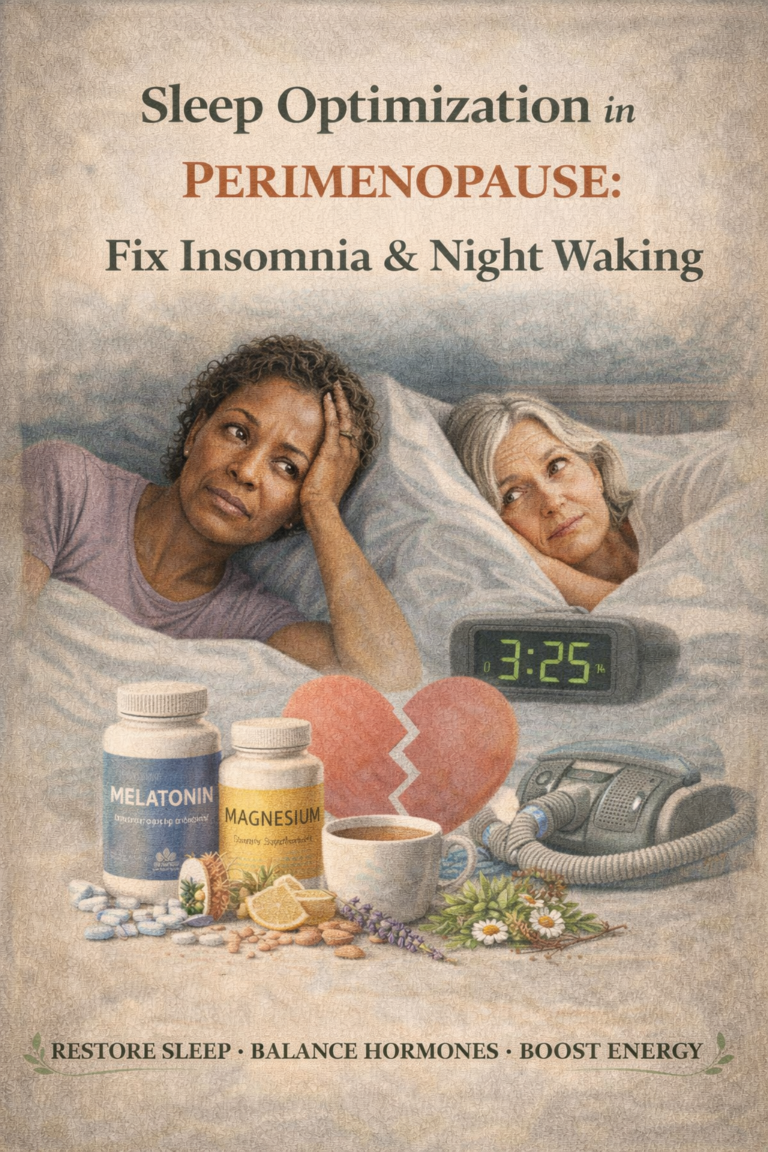
Poor sleep
Mood changes
Weight changes
Irritability
Hair and skin changes
In one large global study, 95% of women reported exhaustion, making fatigue one of the most common symptoms of the perimenopausal transition.
This is a major shift from the traditional understanding that hot flashes are the primary symptom.
Instead, we’re seeing that energy, mood, sleep, and cognition are often the earliest signs.
—
Symptoms Can Start Before Your Period Changes
Another important takeaway from emerging research:
Perimenopause symptoms often begin before menstrual cycles change.
That means:
Your periods may still be regular
Your labs may appear “normal”
You may not have hot flashes yet
…and you can still be in perimenopause.
This is one of the biggest reasons women are often dismissed or misdiagnosed during this stage.
They’re told:
“Your labs are normal.”
“You’re just stressed.”
“You’re getting older.”
But what you’re experiencing is real.
And often — it’s hormonal.
—
Why This Matters for Midlife Women
Understanding the true symptoms of perimenopause helps women:
Recognize changes earlier
Seek appropriate support
Avoid unnecessary frustration
Understand their bodies better
Make proactive lifestyle adjustments
Improve energy, sleep, and mood
Perimenopause is not a disease.
But it is a significant hormonal transition.
And like any transition, it deserves awareness, education, and support.
Midlife is not a decline.
It’s a recalibration.
—
Are You Noticing These Changes?
You may be in perimenopause if you’re experiencing:
Low energy or fatigue
Brain fog or difficulty focusing
Poor or disrupted sleep
Mood swings or irritability
Weight gain (especially midsection)
Loss of motivation
Hair or skin changes
Even if your cycles are still regular.
Even if your labs are normal.
Even if you’ve been told “everything looks fine.”
You’re not alone — and you’re not crazy.
—
Want to Know What’s Draining Your Energy?
If you’re noticing changes in:
Energy
Sleep
Mood
Body composition
Focus
Motivation
Take the Energy Drain Quiz to identify what may be contributing to your symptoms and what to do next.
—
Research Sources
Mayo Clinic Global Perimenopause Study
Large Symptom Prevalence Study (17,000+ Women)
https://www.health.com/perimenopause-symptoms-more-common-than-hot-flashes-11929174
Emerging Diagnostic Criteria Discussion
—
Medical Disclaimer
This content is for educational and informational purposes only and is not intended as medical advice, diagnosis, or treatment. This information does not replace individualized care from a qualified healthcare professional. Always consult your healthcare provider before making changes to medications, supplements, diet, or lifestyle, especially if you have underlying medical conditions or are taking prescription medications. Antigravity Wellness provides specialty hormone and functional medicine services and does not provide emergency care. If you are experiencing a medical emergency, call 911 or seek immediate medical attention.