

If you’ve ever been told your symptoms are “just part of aging,” this is your reminder:
the science says otherwise.
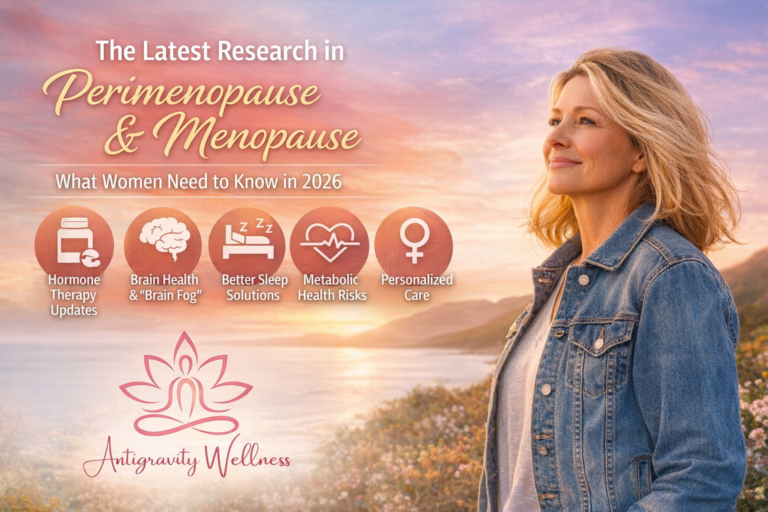
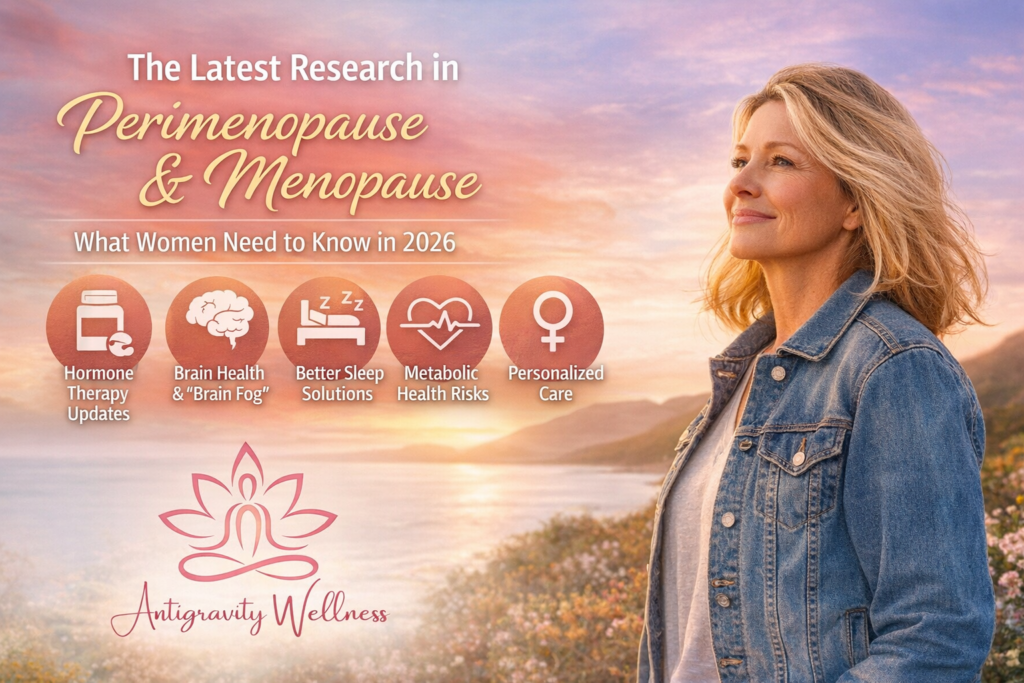
Over the past year, research in perimenopause and menopause has evolved in powerful ways. What used to be minimized or misunderstood is now being validated, studied, and—most importantly—treated more effectively.
Let’s break down the most important updates and what they mean for you.
1. Hormone Therapy Is Being Reframed—Not Feared
For years, women were told to avoid hormone therapy.
Now? The conversation has changed.
The latest research and guidelines confirm that hormone therapy remains the most effective treatment for hot flashes, night sweats, and many other symptoms—when prescribed appropriately.
For many healthy women:
- Under age 60
- Or within 10 years of menopause
…the benefits often outweigh the risks when treatment is individualized.
Source:
https://www.tandfonline.com/doi/full/10.1080/13697137.2025.2585487
2. A Major Shift in FDA Messaging
In late 2025, the FDA began updating outdated warnings on hormone therapy.
Why this matters:
- Older warnings were based on early data that didn’t reflect how we prescribe hormones today
- New labeling better reflects current evidence and real-world use
3. New Non-Hormonal Options Are Finally Here
Not every woman can—or wants to—take hormones.
That’s where newer options like come in.
This medication:
- Targets the brain pathways involved in hot flashes
- Reduces frequency and severity
- Offers a true alternative for women who cannot use estrogen
Source:
https://www.tandfonline.com/doi/full/10.1080/03007995.2025.2470752
4. Sleep Is Now a Primary Target (Not an Afterthought)
Sleep disruption is no longer seen as “just a symptom.”
Research now shows:
- Poor sleep worsens hormonal symptoms
- It increases risk for weight gain, insulin resistance, and mood disorders
- It impacts brain health and longevity
Source:
https://pmc.ncbi.nlm.nih.gov/articles/PMC12428155/
5. Brain Health & “Brain Fog” Are Finally Being Taken Seriously
If you’ve experienced:
- Forgetfulness
- Difficulty focusing
- Feeling mentally “off”
You’re not imagining it.
New research shows that fluctuating estrogen levels during perimenopause can impact:
- Brain connectivity
- Mood regulation
- Cognitive clarity
Source:
https://www.sciencedirect.com/science/article/abs/pii/S0006322326000569
6. Perimenopause Is a Critical Window for Mental Health
We’re learning that perimenopause—not just menopause—is a high-risk window for mood changes.
Hormonal fluctuations can contribute to:
- Anxiety
- Irritability
- Depression
Source:
https://obgyn.onlinelibrary.wiley.com/doi/full/10.1002/ijgo.70943
7. Your Metabolism Is Changing—And It’s Not Your Fault
Research continues to confirm:
During the menopause transition, the body tends to:
- Store more fat (especially abdominal)
- Become more insulin resistant
- Experience changes in cholesterol and blood pressure
Source:
https://www.jacc.org/doi/10.1016/j.jacadv.2025.101791
8. Bone Loss Starts Earlier Than You Think
Bone density decline often begins during perimenopause, not just after menopause.
Early prevention is key:
- Strength training
- Adequate protein
- Vitamin D
- Hormonal support when appropriate
Source:
https://uspreventiveservicestaskforce.org/uspstf/recommendation/osteoporosis-screening
9. Vaginal & Urinary Symptoms Are Treatable (and Common)
Symptoms like dryness, irritation, and recurrent UTIs are common—but often under-treated.
Effective options include:
- Vaginal estrogen
- DHEA
- Non-hormonal therapies
Source:
https://www.auanet.org/guidelines-and-quality/guidelines/genitourinary-syndrome-of-menopause
10. The Biggest Shift of All: Personalized Care
If there’s one theme across all of this research, it’s this:
There is no one-size-fits-all approach to perimenopause and menopause.
Your:
- Symptoms
- Labs
- Lifestyle
- Goals
…all matter.
You Don’t Have to Figure This Out Alone
If you’re reading this and thinking:
- “This sounds like me”
- “I’ve been told everything is normal, but I don’t feel normal”
- “I want answers, not guesses”
You’re exactly who we help.
At , we specialize in helping women uncover the root causes of their symptoms and create a clear, personalized plan forward.
Ready to Take the Next Step?
If you live in Washington or Oregon, the best place to start is simple:
👉 Take our Readiness Questionnaire
This helps us determine:
- If you’re a good fit for our approach
- What level of support you may need
- The best next step for your care
Comment “Hormone Help” or click the link below to get started.
Because this phase of life?
It’s not the beginning of the end.
It’s your opportunity to reclaim your health—with the right support.
Medical Disclaimer
This blog is for informational and educational purposes only and is not intended as medical advice, diagnosis, or treatment. The information provided should not be used as a substitute for professional medical advice from your healthcare provider. Always consult with a qualified healthcare professional before starting or changing any treatment, medication, or supplement, especially if you have underlying medical conditions or are taking prescription medications.
Antigravity Wellness provides medical services only to patients located in Washington and Oregon state where licensure permits.