
It was early December, and Jane found herself standing in her bathroom, staring at the fogged mirror after another hot flash. At 52, she was deep in perimenopause: irregular periods, racing heart at night, brain fog, thinning hair. She’d always been active — strength training in the gym, morning walks, a solid diet — but lately she felt flat. The skin on her face looked tired, the hair on her part seemed thinner, and above all, there was this persistent sense of low-grade fatigue, even though she was sleeping “enough.”
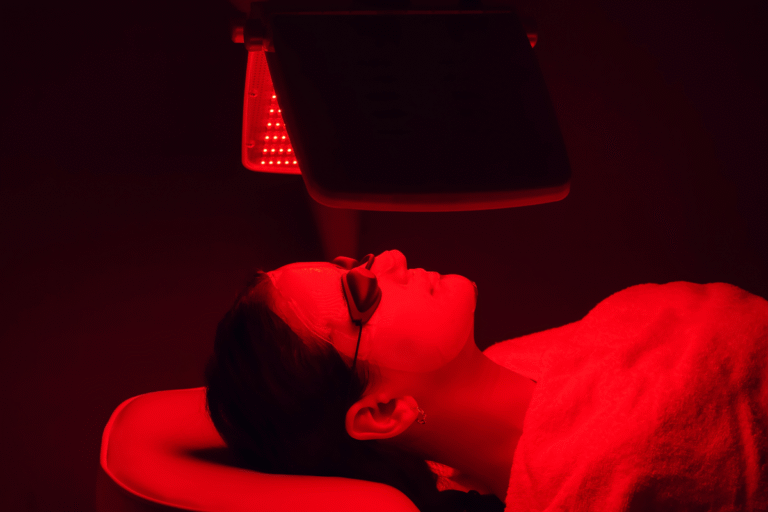
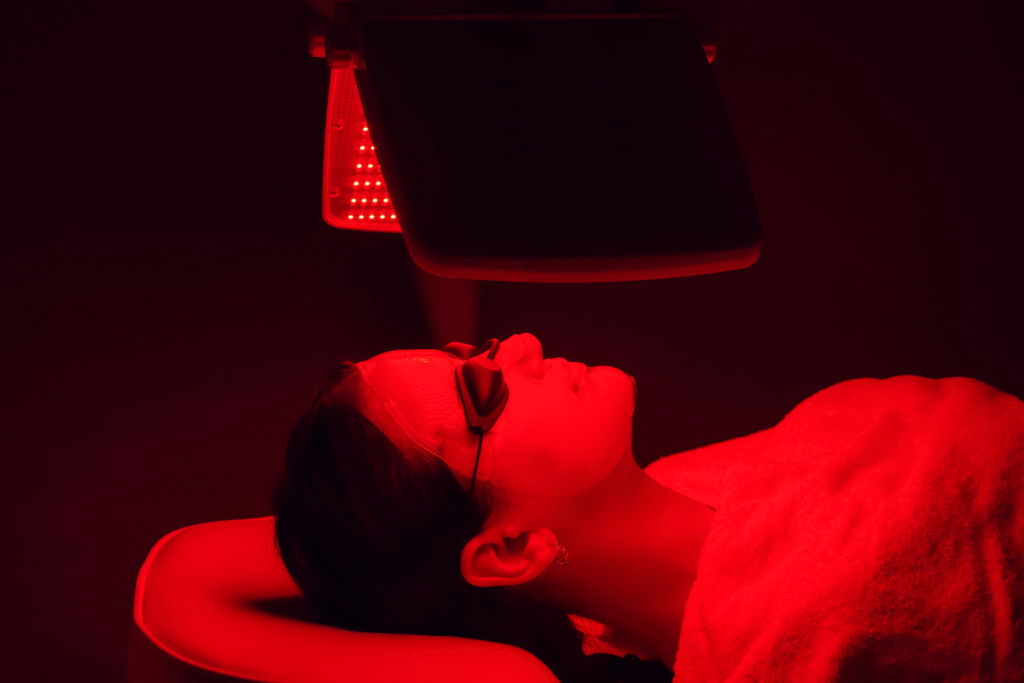
At a med-spa, she lingered by a display of a sleek panel of red lights. The technician said, “This is low-level light therapy — photobiomodulation. It might help with skin, hair, mood, energy.” Jane left curious.
Over the next 8 weeks, she used a home red-light panel three times a week, and concurrently had two in-office treatments. She noticed subtle but real changes: her skin tone improved, hair felt thicker, and perhaps more importantly, she found her afternoon slump less pronounced, her workouts regained some spark, and she felt less resigned to “just another menopause symptom.” While she was being treated for her hot flashes and hormone swings with bioidentical hormone therapy, the light-therapy piece felt like a small lever she could pull to help things get better faster rather than just waiting it out.
What is Red Light Therapy (RLT)?
Photobiomodulation (sometimes called low-level laser therapy or red-light/near-infrared light therapy) uses specific wavelengths of red (≈630-660 nm) and near-infrared light (≈800-900 nm) to stimulate cellular activity — especially in the mitochondria — increasing ATP production, improving circulation, reducing oxidative stress and inflammation.
It’s used in everything from wound healing, hair regrowth, skin rejuvenation, to emerging hormone-and sleep-related applications.
For example, in hair loss for women, one review noted that red-light/LED devices (e.g., ~655 nm) improved hair density versus sham in a 2007 trial. (todaysgeriatricmedicine.com)
Important Regulatory Note: The U.S. Food & Drug Administration (FDA) has not approved red-light therapy devices specifically for many of the off-label hormone or menopause-related uses (for example vaginal rejuvenation devices). (PMC)
Some devices are “FDA-cleared” or “FDA-registered,” meaning they meet safety/marketing standards, but that is not the same as FDA approval for a specific indication.
How Does This Apply to Perimenopausal Women?
For women navigating perimenopause, the hormonal shifts — fluctuating estrogen, progesterone, DHEA, testosterone — intersect with changes in sleep, mood, skin, hair, metabolism. Here’s how red light therapy might fit in:
- Skin & collagen support: As estrogen declines, skin loses elasticity, collagen thins, and you may notice dullness or fine lines. RLT has documented benefits in skin renewal, collagen production, circulation. (Los Angeles Times)
- Hair/thinning in mid-life: Hormonal change can contribute to thinning hair. Low-level laser therapy has evidence for increasing hair density and improving scalp circulation. (todaysgeriatricmedicine.com)
- Mood, energy & circadian rhythm support: Emerging evidence suggests photobiomodulation may influence hormones tied to circadian rhythm (melatonin, cortisol) and cellular energy metabolism — which could help perimenopausal women who feel fatigued or low in mood. (Plunsana – Cold Plunge & Sauna Studio)
- Intimate wellness: Some use RLT for vaginal or pelvic tissue health (circulation, lubrication) which can decline with menopausal transition. But caution: large-scale evidence is still limited and regulatory approval is lacking. (pauz.health)
- Recovery / inflammation / joint/muscle health: Midlife women may have more joint stiffness, slower recovery post-workout (your bodybuilding style included!). RLT may support muscle recovery and reduce inflammation, which is useful alongside your glutes/quads/calf heavy scheme. (pauz.health)
While red light is not a stand-alone cure for perimenopause, it can be a valuable adjunct: one piece of the broader plan alongside hormones, lifestyle, circadian rhythm, diet.
Benefits of Red Light Therapy (Backed by Evidence)
Here’s a breakdown of what the evidence shows — and where we still need more research:
Strong/Moderate evidence for:
- Skin rejuvenation: improved collagen, reduced fine lines, better skin tone. (Los Angeles Times)
- Hair growth/thickness: women and men using low-level laser devices (~630-660 nm) saw improved hair density compared to sham. (todaysgeriatricmedicine.com)
- Reduced inflammation / improved circulation / enhanced mitochondrial function: these are mechanisms well documented in photobiomodulation research. (pauz.health)
Emerging evidence for:
- Mood, energy/fatigue, sleep support in perimenopausal/hormone-change context. While promising, the studies are early and often small. (Plunsana – Cold Plunge & Sauna Studio)
- Intimate tissue health (vaginal dryness, lubrication) in menopausal women. Early results encouraging, but more high-quality human trials needed. (pauz.health)
Caveats & Things to Know:
- Whole-body claims (weight loss, major hormone resetting) are not supported robustly yet.
- “FDA-cleared” ≠ approved for all indications. The FDA has warned against some energy-based devices marketed for vaginal rejuvenation without adequate evidence. (Breastcancer.org)
- Device quality, wavelength, irradiance (power density), duration, and consistency matter a lot. Cheap devices may under-deliver. (Tracy Donegan Blog)
- Use should complement, not replace, foundational hormone care, circadian rhythm support, sleep quality, nutrition, and lifestyle.
Options: Med-Spa vs. Home Use
Med-Spa / Clinical Setting:
- Higher-powered devices, professional supervision, possibly combined with other treatments (hormones, microneedling, physical therapy).
- Examples: full-body panels, dedicated photobiomodulation beds.
- Higher cost per session, may require multiple visits; downtime minimal but cost/time investment higher.
- Good for targeted issues (skin resurfacing, hair clinics, pelvic floor therapy) under supervision.
At-Home Devices:
- Greater convenience, lower cost per use, good for consistent maintenance sessions.
- Choose devices with therapeutic wavelengths (typically ~630-660 nm red and ~800-900 nm NIR), sufficient irradiance, reliable brand/manufacturer transparency. (Tracy Donegan Blog)
- Examples (not clinical endorsement):
Celluma DELUX Series 2 Full‑Body LED Panel
clinical‑grade full‑body panel
$14,995.00
Hooga HG300 Red & Near‑Infrared Panel
mid‑home panel high power
$189.00
SolaWave Wrinkle Retreat Light Therapy Face Mask
home face mask anti‑aging
$349.00
LightStim for Wrinkles Handheld LED Device
handheld targeted
$249.00
Megelin LED Red Light Therapy Machine
budget home machine
$139.00
Megelin Red Light Therapy Pad with Neck Support
home pad/neck support
$299.00
LifePro Red Light Panel 660/850 nm
entry home panel
$266.46
Sharper Image Red Light Therapy Lamp
starter lamp
$64.99
Here are some quick summaries:
- Celluma DELUX Series 2 Full‑Body LED Panel: A high-end full-body panel, fancier price, covers large surface area — closer to med-spa strength for home.
- Hooga HG300 Red & Near‑Infrared Panel: Home panel with wavelengths 660/850 nm, good mid-tier.
- SolaWave Wrinkle Retreat Light Therapy Face Mask: Face-mask for skin focus — useful for midlife skin changes.
- LightStim for Wrinkles Handheld LED Device: Handheld, targeted device for wrinkle/skin zones.
- Megelin LED Red Light Therapy Machine: At-home machine platform.
- Megelin Red Light Therapy Pad with Neck Support: A pad format for targeted use (neck, shoulders) which could be helpful for e.g., sleep/energy zones.
- LifePro Red Light Panel 660/850 nm: Entry level home panel option.
- Sharper Image Red Light Therapy Lamp: Budget starter lamp with red/infrared; good for introduction.
HSA/FSA reimbursement?
- Some red light devices may qualify for HSA/FSA reimbursement if prescribed by a licensed healthcare provider for a specific medical condition and meet IRS rules. But this is not guaranteed and varies by plan. The device must typically be considered “medically necessary.”
- Many at-home devices are considered wellness tools, not FDA-approved for specific disease treatment, so reimbursement eligibility may be limited. Always check with your HSA/FSA administrator and provider.
- Note: If the device is marketed for cosmetic uses (skin texture, wrinkle reduction), reimbursement is less likely.
Key Considerations Before You Buy or Use
- Confirm the wavelengths: Look for red ~630-660 nm and near-infrared ~800-900 nm — many studies and expert reviews highlight that range. (Tracy Donegan Blog)
- Check irradiance/power density (mW/cm²) and exposure distance/time — many consumer devices don’t publish this well.
- Ensure it’s appropriately cleared or registered by FDA/Safety standard — though clearance doesn’t mean the device is approved for all uses.
- Use consistently: Photobiomodulation effects build over time rather than instantly.
- Integrate with your broader plan: Hormonal status, sleep/circadian rhythm support, nutrition, exercise (your heavy sets and glute/quad/calf work matter) — red light is one lever, not the only one.
- Consult your provider: Especially if you have hormone therapy, implants, photosensitivity, cancer history, thyroid issues — some contraindications may apply.
- Manage expectations: While benefits are promising, this is not a guaranteed fix — results vary by individual, device quality, consistency, underlying health status.
Case Study: “Lynn”
Lynn is a 49-year-old kindergarten teacher in Portland, OR. She entered perimenopause ~18 months prior:
- Irregular cycles
- Increased neck/shoulder tension
- Thinning hair near her temples
- Skin tone loss
- Marked afternoon fatigue despite sleeping 7 hours
- Slower recovery from her heavy training days in thegym
When she came to me at Antigravity Wellness, I noted her labs were stable (thyroid fine, iron adequate), but she clearly had reduced resilience. Together, we implemented a multi-modal plan:
- continue her current training plan in the gym,
- optimized sleep (dark room, no screens after 9 pm),
- dietary tweaks (higher omega-3, ensured ferritin mid-range),
- and added red light therapy: At-spa panel once weekly for 6 weeks + home red light pad 3× weekly.
After 12 weeks, Lynn reported:
- skin texture improved (“my face feels smoother and less tired”),
- hair felt fuller at the part line,
- afternoon slump largely gone (she resumed full workouts without feeling crashed),
- and shoulder/neck tension dropped.
Her perimenopausal symptoms (hot flashes, cycle irregularity) we addressed with bioidentical hormone replacement, and with the lifestyle changes and red-light therapy, her overall “system stress” felt lower. She described red light as “the little extra I didn’t expect — it made the training and sleep efforts pay off more.”
Integrating Red Light Therapy Into Your Perimenopause Strategy
- Use it as a supportive tool, not a substitute for hormone care, sleep hygiene, nutrition, strength training.
- Schedule sessions when convenient and consistent — e.g., 10-15 min of face/neck in the morning or before gym, or 20-30 min full-body panel on off-day.
- Track outcomes: hair density, skin texture, energy levels, workout recovery, mood dips.
- Combine with your existing wellness system — RLT may enhance recovery from your intense glute/quad/calf/training regime, support skin/hair integrity, and assist mood/energy especially in seasonal low-light months.
- If using at-home device, select based on your budget, target area (skin/hair/body), and willingness to maintain consistency.
- For HSA/FSA: keep documentation of provider recommendation if using medical justification; designate if device is for “medical necessity” rather than purely cosmetic.
- Discuss with your medical provider (especially if you have hormone therapy, implants, photo-sensitivity, or other medical issues) whether RLT is suitable and safe for you.
Our Clinic’s Approach
At Antigravity Wellness, we look at you as a whole person — including your hormone profile, circadian rhythm, lifestyle, sleep, training, and even your light exposure environment.
For women in Washington and Oregon navigating perimenopause, we recognize how seasonality, training stress, hormonal shifts, and recovery demands intersect.
We’re not just offering “another gadget” — we’re aligning therapies (including RLT when appropriate) with your individualized plan for skin/hair, mood, recovery, hormone balance, and vitality.
If you’re a woman in WA or OR interested in seeing whether this integrated model is a fit for you, follow us @antigravitywellness on Instagram and send us a DM “Hormone Help” to get started and access our pre-visit Readiness Questionnaire.
✨ Want to learn how to use light to boost your mood, sleep, and hormones year-round? Download my free Light & Hormone Connection Guide here and discover how small daily changes in light exposure can make a big difference in your energy and wellbeing.
References
- Lanzafame RJ, et al. The Rationale for Photobiomodulation Therapy of Vaginal … PMC. (PMC)
- “Light Therapy & Menopause.” FringeHeals blog. (Fringe)
- “Red Light Therapy in Menopause: Fab or Faux?” Pauz.Health. (pauz.health)
- “Light Therapy — A Promising Option for Menopausal Hair…” Today’s Geriatric Medicine. (todaysgeriatricmedicine.com)
- “Red Light Therapy for Hormonal Balance.” Plunsana. (Plunsana – Cold Plunge & Sauna Studio)
- “Red-Light Therapy for Vaginal Wellness.” LATimes. (Los Angeles Times)
Medical Disclaimer
This blog post is for educational purposes only and does not constitute medical advice, diagnosis, or treatment. Please consult your qualified healthcare provider before beginning any new therapy, device, or treatment — especially if you are perimenopausal, on hormone therapy, have photosensitivity, thyroid disease, implants, a history of cancer, or other medical conditions. The purchase or use of any device mentioned is entirely at your discretion and responsibility.