
You don’t feel bone loss happening… until you do.
Most women don’t think about osteoporosis prevention in perimenopause until much later in life. It’s often seen as something that happens after menopause—or even in your 60s or 70s.
But the truth is, bone loss begins years earlier, often during your late 30s and 40s.
By the time osteoporosis is diagnosed, significant bone loss has already occurred.
If you want strong bones later, the work starts now.
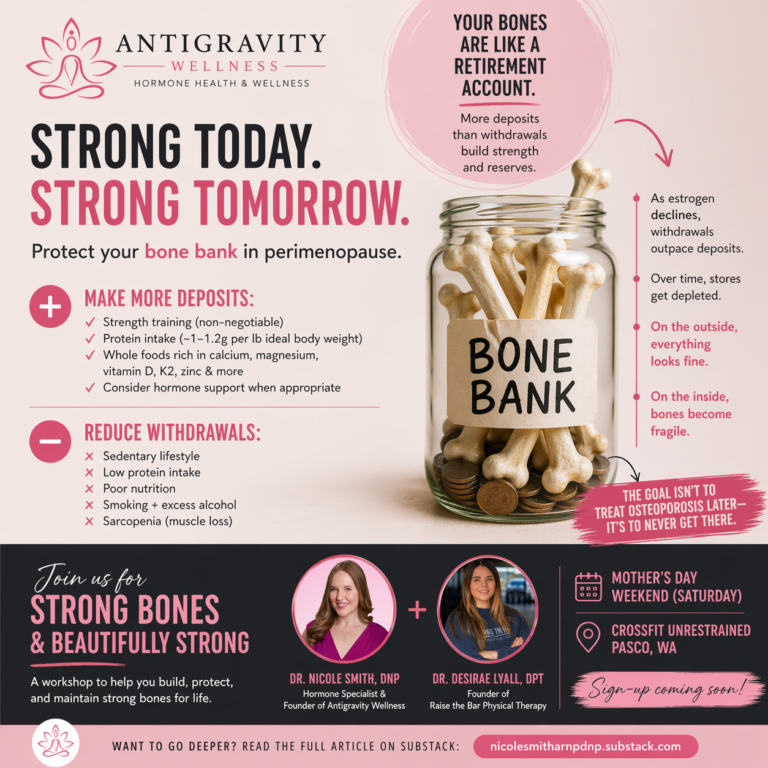
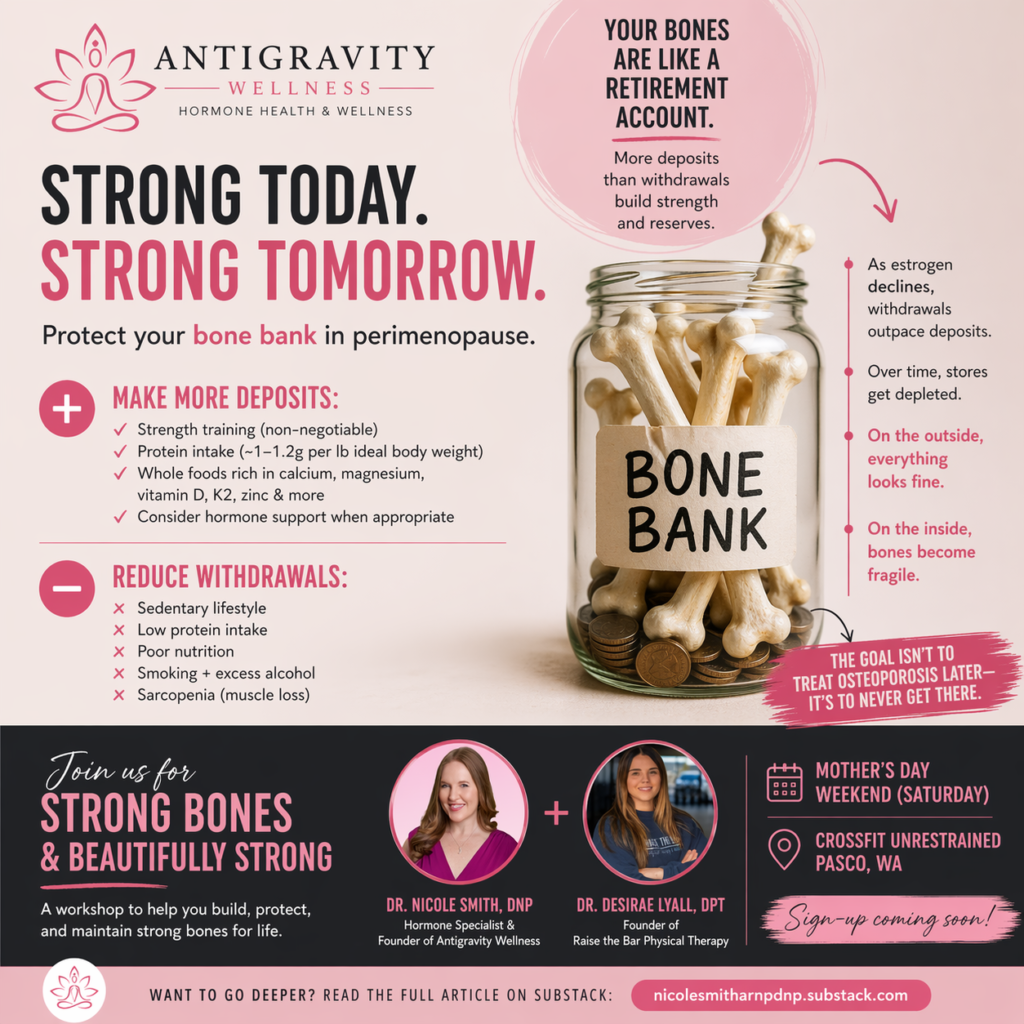
Your Bones Are Like a Retirement Account
Your body is constantly remodeling bone through two processes:
- Bone formation (deposits)
- Bone resorption (withdrawals)
In your 20s and early 30s, you’re in your “peak earning years.” You’re building bone mass, making more deposits than withdrawals, and strengthening your foundation.
But during perimenopause, everything shifts.
As estrogen declines, your body enters what I call “retirement mode.”
You’re now living on a fixed income.
If withdrawals start happening faster than deposits, your bone density decreases over time.
On the outside, everything may look fine. But internally, your bones become more porous and fragile—leading to osteopenia and osteoporosis.
Why Bone Loss Happens in Perimenopause
One of the primary drivers of bone loss is declining estrogen levels.
Estrogen plays a critical role in:
- Regulating bone turnover
- Slowing bone breakdown
- Supporting bone formation
When estrogen drops:
- Bone resorption increases
- Bone formation cannot keep up
- Net bone loss begins
This is why menopause is one of the biggest risk factors for osteoporosis—and why prevention must start earlier.
How to Prevent Osteoporosis: Build Your “Bone Bank”
If you want to prevent osteoporosis naturally and effectively, your focus should be on:
Increasing deposits
Reducing withdrawals
Here’s how.
1. Strength Training for Bone Density (Non-Negotiable)
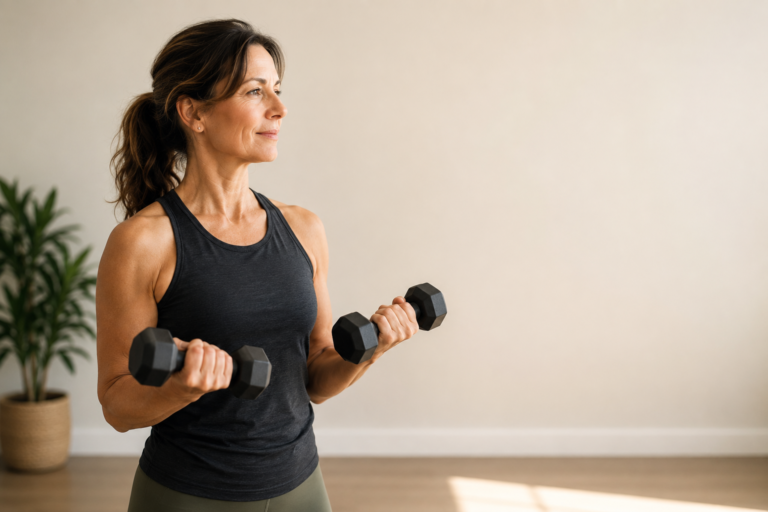
If there’s one thing every woman in perimenopause should be doing—it’s strength training.
While walking is great for general health, it does not provide enough stimulus to build bone density.
To strengthen bone, you need progressive resistance training.
Benefits include:
- Increased bone mineral density
- Improved muscle mass (protects bone)
- Reduced risk of falls and fractures
Best exercises for bone health:
- Squats
- Deadlifts
- Lunges
- Resistance training with weights
- Impact training (when appropriate)
2. Protein Intake for Bone and Muscle Health
Protein is one of the most overlooked components of bone health in women over 40.
It supports:
- Muscle mass (which loads bone)
- Bone structure
- Metabolic health
Recommended intake:
- Before menopause: ~1g per lb of ideal lean body weight
- After menopause: ~1.2g per lb of ideal lean body weight
Most women are under-eating protein—especially during this critical stage.
3. Nutrition for Bone Health: Key Vitamins and Minerals
Bone health is not just about calcium.
To support bone formation and density, your body needs a full spectrum of nutrients:
- Calcium
- Magnesium
- Vitamin D
- Vitamin K2
- Zinc
- Boron
- Phosphorus
- Silica
A whole-food, nutrient-dense diet is the foundation of osteoporosis prevention.
Examples of bone-supportive foods:
- Leafy greens
- Dairy or fortified alternatives
- Sardines and salmon (with bones)
- Nuts and seeds
- Root vegetables
- Mineral-rich whole foods
4. Hormone Therapy for Bone Health (When Appropriate)
For some women, menopausal hormone replacement therapy (MHRT) can be a key part of osteoporosis prevention.
If menopause is like living on a fixed income, hormone therapy can help stabilize your bone “budget.”
Benefits may include:
- Slowing bone loss
- Preserving bone density
- Reducing fracture risk
This is not one-size-fits-all—but it’s an important conversation to have with a qualified provider.
What Causes Bone Loss to Happen Faster?
To protect your bones, you also need to reduce factors that increase bone breakdown.
Common contributors include:
- Sedentary lifestyle
- Low protein intake
- Poor nutrition
- Smoking
- Excess alcohol
- Sarcopenia (muscle loss with age)
Loss of muscle mass is especially important—because muscle and bone health are directly connected.
The Goal Isn’t to Treat Osteoporosis—It’s to Prevent It
Osteoporosis doesn’t start when you’re diagnosed.
It starts quietly, years earlier.
But here’s the good news:
Osteoporosis is one of the most preventable chronic conditions in women’s health.
With the right strategy, you can:
- Build stronger bones
- Maintain muscle
- Protect your metabolism
- Reduce fracture risk long-term
Local to the Tri-Cities? Get Your Baseline
At Antigravity Wellness in Kennewick, WA, we offer:
- Body Composition Analysis
- Muscle mass and fat distribution tracking
- Metabolic Strategy Protocol upgrades
Understanding your baseline is key to building a personalized plan for long-term health.
Join Us: Osteoporosis Prevention Workshop in Pasco, WA
Want hands-on guidance and a clear plan?
Join us for:
Strong Bones & Beautifully Strong
With:
Dr. Nicole Smith, DNP
Dr. Desirae Lyall, DPT (Raise the Bar Physical Therapy)
📍 CrossFit Unrestrained, Pasco WA
🗓 Mother’s Day Weekend (Saturday)
✨ Sign-up coming soon!
This workshop will cover:
- Strength training for bone density
- Nutrition strategies for midlife women
- Hormone support options
- Practical steps you can start immediately
Read More
Want to dive deeper into the science and strategy?
Read the full article here:
https://nicolesmitharnpdnp.substack.com/
Medical Disclaimer
This content is for educational purposes only and does not constitute medical advice. Always consult with a qualified healthcare provider before making changes to your health plan. Individual needs vary and should be evaluated in a clinical setting.