


It started with a headache.
At first, she assumed it was another perimenopause symptom—or perhaps the result of another restless night. She had awakened hot several times, her heart seemed to be beating a little faster than usual, and she felt unusually tired.
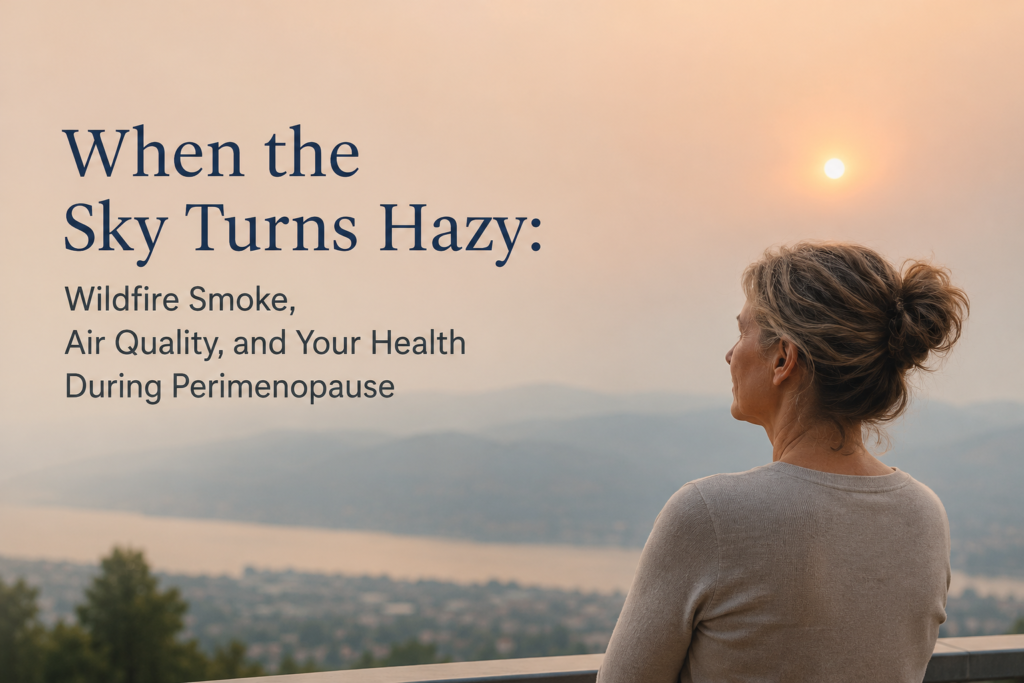
When she opened the blinds that morning, however, the sunlight looked different. The sky over the Tri-Cities was hazy, the horizon had nearly disappeared, and the faint smell of smoke had made its way inside the house.
She checked the air quality and discovered that it had moved into the unhealthy range overnight.
Suddenly, the headache, scratchy throat, racing heart, poor sleep, and unusual fatigue had another possible explanation.
For women navigating perimenopause or menopause, wildfire season can introduce an additional layer of stress to a body that may already be dealing with disrupted sleep, temperature sensitivity, palpitations, migraines, fatigue, metabolic changes, anxiety, or changes in cardiovascular risk.
That does not mean every symptom during smoke season is caused by the air—or that perimenopause automatically makes someone unusually vulnerable to smoke. It does mean that symptoms can overlap, environmental exposures matter, and protecting your air may be an important part of protecting your health.
What Is Actually in Wildfire Smoke?
Wildfire smoke is a complex mixture of gases, water vapor, and particles released when trees, plants, buildings, vehicles, and other materials burn.
One of the greatest health concerns is fine particulate matter, commonly called PM2.5. These particles are 2.5 micrometers in diameter or smaller—small enough to travel deep into the lungs. Exposure can irritate the respiratory tract, aggravate asthma and other lung conditions, and place additional strain on the cardiovascular system.
Wildfire smoke may cause:
- Burning, watery, or irritated eyes
- Runny nose or irritated sinuses
- Scratchy or sore throat
- Headaches
- Coughing
- Wheezing
- Shortness of breath
- Chest discomfort
- Fatigue
- A faster-than-usual heartbeat
- Worsening asthma or COPD symptoms
Smoke can travel hundreds or even thousands of miles from an active fire. You do not need to see flames—or even smell strong smoke—to be exposed to unhealthy levels of fine particles.
You can check current conditions through the AirNow Fire and Smoke Map.
Why Smoke Season Can Feel Especially Difficult During Perimenopause
Research specifically examining short-term wildfire smoke exposure during perimenopause is still limited. We should therefore be careful not to blame every worsening symptom on hormones or suggest that all perimenopausal women respond to smoke in the same way.
However, several areas of overlap are clinically important.
Sleep May Become Even More Disrupted
Many women already struggle with night sweats, temperature changes, anxiety, insomnia, or frequent nighttime awakenings during the menopause transition.
Smoke may irritate the nose, throat, and lungs, contributing to congestion, coughing, headaches, or discomfort that makes restorative sleep even more difficult. Closing the windows to keep smoke out can also make the bedroom feel hotter if adequate air conditioning is unavailable.
When sleep deteriorates, the effects may be felt throughout the next day as increased hunger, cravings, irritability, brain fog, reduced exercise tolerance, or greater sensitivity to stress.
Headaches and Migraines May Be Triggered
Hormonal fluctuations are a common migraine trigger during perimenopause. Smoke, strong odors, dehydration, heat, disrupted sleep, and changes in routine may provide additional triggers.
If you experience a headache during a smoke event, consider your complete environment rather than assuming it is “just hormones.”
A sudden, severe, or neurologically unusual headache—especially one accompanied by weakness, facial drooping, confusion, difficulty speaking, fainting, or vision loss—requires immediate medical evaluation.
Palpitations and Cardiovascular Symptoms Can Be Hard to Interpret
Palpitations can occur during perimenopause, but they should not automatically be dismissed as hormonal. Fine-particle air pollution has been associated with adverse cardiovascular effects, particularly in susceptible individuals.
The menopause transition is also an important time to reassess blood pressure, cholesterol, insulin resistance, family history, sleep, physical activity, and other cardiovascular risk factors.
If you experience chest pain, significant shortness of breath, fainting, or sustained or concerning heart palpitations, seek appropriate medical care rather than assuming menopause is the only explanation.
Fatigue and Brain Fog May Worsen
Poor sleep, headaches, heat, dehydration, reduced outdoor activity, respiratory irritation, and the stress of an active wildfire season can all contribute to fatigue and difficulty concentrating.
This can make it challenging to determine whether a difficult day is related to hormones, air quality, lifestyle factors, an underlying medical issue—or a combination of several things.
Tracking your symptoms alongside the daily Air Quality Index can help you recognize patterns.
A Composite Case Study: When “Hormone Symptoms” Were Not the Whole Story
The following example is a fictional composite created for educational purposes. It does not represent one identifiable patient.
“Sarah” was a 49-year-old woman experiencing irregular periods, hot flashes, interrupted sleep, occasional palpitations, and worsening migraines.
During a particularly smoky week, her fatigue became more pronounced. She woke with headaches, felt mildly nauseated, and noticed that her heart seemed to race when she walked outside. She assumed her hormones were suddenly getting worse.
When we looked more closely, several factors were occurring at the same time:
- The regional Air Quality Index had reached unhealthy levels.
- Her bedroom window had been left partially open at night.
- Her HVAC system was bringing outdoor air into the house.
- She had continued her usual outdoor power walks.
- She was drinking less water than usual.
- Smoke irritation was causing her to cough and wake repeatedly.
- Poor sleep was worsening her hunger, headaches, anxiety, and perceived hot-flash burden.
Her hormone health still mattered, but hormones were not the only issue.
She began checking the Air Quality Index each morning, moved her exercise indoors, closed the windows, set the HVAC system to recirculate, replaced the filter, and used a portable HEPA air cleaner in the bedroom. She also prioritized hydration, regular meals, adequate protein, and additional recovery.
Her symptoms did not disappear immediately, but the headaches, nighttime coughing, and unusually intense fatigue improved as her exposure decreased.
The lesson was not that every symptom was caused by wildfire smoke. The lesson was that environmental health belongs in the larger clinical picture.
Three Ways to Improve Your Indoor Air Quality
1. Keep Outdoor Smoke From Entering Your Home
When outdoor air quality is poor:
- Close windows and doors.
- Limit how frequently exterior doors are opened.
- Set your HVAC system to recirculate, if that option is available.
- Close the system’s outdoor air intake when appropriate.
- Make sure window air-conditioning units are properly sealed.
- Avoid using a single-hose portable air conditioner during smoky conditions if it pulls unfiltered outdoor air into the home.
- Air out the house when outdoor air quality improves.
Remember to balance smoke protection with heat safety. If you cannot keep your home safely cool, consider spending time in a cleaner, air-conditioned location such as a library, community center, or the home of a friend or family member.
2. Filter the Air You Are Breathing
Use a portable HEPA air cleaner that is appropriately sized for the room. If you have only one unit, place it in the room where you spend the most time—often the bedroom.
Run it continuously during a smoke event, ideally at the highest tolerable setting.
If your HVAC system can safely accommodate one, use a MERV-13 filter or the highest-efficiency filter recommended for your system. Running the system’s fan more frequently can help move indoor air through the filter.
Filters may become dirty faster during wildfire season, so inspect and replace them as needed.
If you are unsure what your system can safely handle, consult the manufacturer or a qualified HVAC professional.
3. Avoid Adding More Particles to Your Indoor Air
During a smoke event, try to avoid:
- Burning candles or incense
- Smoking or vaping indoors
- Wood-burning fireplaces
- Aerosol sprays
- Frying or broiling foods
- Activities that produce significant dust
- Vacuuming without a HEPA-filtered vacuum
Use a damp cloth or mop to capture particles that have settled on indoor surfaces.
Should You “Detox” After Wildfire Smoke Exposure?
It is understandable to want to cleanse your system after breathing smoky air, but no supplement, tea, juice cleanse, IV treatment, or detox kit has been proven to remove wildfire particles from the lungs.
The most effective intervention is to reduce or stop the exposure.
Your lungs, liver, kidneys, digestive system, and immune system already perform the body’s normal clearance and repair processes. You can support those systems with foundational habits:
- Drink enough water.
- Eat regular, balanced meals.
- Include adequate protein to support tissue maintenance and repair.
- Eat colorful fruits and vegetables that provide fiber and antioxidant nutrients.
- Prioritize sleep and recovery.
- Avoid smoking and vaping.
- Limit exposure to additional fumes, fragrances, and pollutants.
- Reduce strenuous outdoor exercise when air quality is unhealthy.
- Take prescribed respiratory or cardiac medications as directed.
Be cautious about starting a large number of “detox” supplements. More is not always better, and some products can interact with medications or create additional stress for the liver or kidneys.
What About Outdoor Exercise?
Movement is essential for cardiovascular, metabolic, bone, muscle, and mental health—especially during perimenopause and beyond. However, a poor-air-quality day is not the time to force an intense outdoor workout.
Before exercising, check the Air Quality Index and follow local guidance, particularly if you are in a sensitive group.
On smoky days, consider:
- Moving your workout indoors
- Strength training in a well-filtered environment
- Taking an indoor walking break
- Using a treadmill, stationary bike, or exercise video
- Reducing exercise duration or intensity
- Rescheduling outdoor activity for a time when air quality improves
Heavy breathing increases the amount of air—and potentially the amount of particulate matter—you inhale. Adapting your workout for a few days will not derail your fitness progress.
Do Masks Help With Wildfire Smoke?
A properly fitted N95 respirator can reduce exposure to fine smoke particles when you must be outdoors. KN95 respirators may also help when they fit well and meet appropriate quality standards.
Cloth masks and loose-fitting surgical masks do not offer the same level of protection against PM2.5.
A respirator does not filter all gases found in wildfire smoke, and it cannot fully eliminate exposure. People with significant heart or lung conditions should talk with a healthcare professional about safe respirator use.
Who Is at Higher Risk?
Wildfire smoke can affect anyone, but additional caution is important for:
- Children
- Older adults
- Pregnant individuals
- People with asthma or COPD
- People with heart disease
- People with diabetes
- People with chronic kidney disease
- People who work or exercise outdoors
- People with limited access to filtered, air-conditioned spaces
- Anyone who has previously developed significant symptoms during smoke events
If you have asthma, COPD, or heart disease, follow your existing treatment or action plan. Keep necessary medications—such as a prescribed rescue inhaler—readily available, and do not wait until symptoms become severe to request guidance.
When Should You Seek Medical Care?
Contact your healthcare provider or seek urgent care if you develop:
- Persistent coughing
- Wheezing
- Shortness of breath
- Worsening asthma or COPD symptoms
- A cough that will not stop
- Unusual or persistent palpitations
- Significant dizziness
- Symptoms that continue after you move into cleaner air
- A worsening headache that is not responding to your usual treatment
- Symptoms that concern you or interfere with normal activity
Call 911 or go to the emergency department immediately for:
- Severe difficulty breathing
- Chest pain or pressure
- Blue or gray lips
- Fainting
- New confusion
- Signs of a heart attack
- Signs of a stroke, including facial drooping, one-sided weakness, or difficulty speaking
- Rapidly worsening symptoms
- Any other medical emergency
Do not dismiss significant chest, respiratory, or neurological symptoms as anxiety, smoke exposure, or “just menopause.”
How Antigravity Wellness Supports Women in Midlife
Perimenopause and menopause can affect sleep, energy, mood, metabolism, body composition, sexual health, cardiovascular risk, and overall quality of life. Symptoms are rarely influenced by only one factor.
At Antigravity Wellness, we look at the broader picture—including hormones, thyroid health, metabolic health, nutrition, sleep, stress, environmental factors, movement, and your individual medical history.
Our goal is to help women better understand what is happening in their bodies and create a realistic, personalized plan for feeling and functioning better during midlife and beyond.
Is Antigravity Wellness the Right Fit for You?
Take our readiness questionnaire to learn more about our approach and determine whether working with Antigravity Wellness may be a good fit for your needs.
Take the Readiness Questionnaire
We also offer appointments through our Functional and Aesthetic Injection Clinic, along with body composition services designed to help you establish a baseline, track meaningful progress, and develop an individualized action plan.
You can learn more about our services and sign up for a complimentary consultation below:
Learn More and Schedule a Free Consultation
References
- U.S. Environmental Protection Agency. Wildfires and Indoor Air Quality.
- U.S. Environmental Protection Agency. Reduce Your Smoke Exposure.
- U.S. Environmental Protection Agency. Create a Clean Room to Protect Indoor Air Quality During a Wildfire.
- AirNow. Fire and Smoke Map.
- Centers for Disease Control and Prevention. Wildfires and Your Safety.
- Centers for Disease Control and Prevention. How Wildfire Smoke Affects Your Body.
- Centers for Disease Control and Prevention. Wildfire Smoke and People With Chronic Conditions.
- National Institute of Environmental Health Sciences. Air Pollution and Your Health.
- Naserinejad N, et al. Wildland Fire, Air Pollution and Cardiovascular Health. Journal of Cardiovascular Development and Disease. 2023.
- Basith S, et al. The Impact of Fine Particulate Matter 2.5 on the Cardiovascular System. 2022.
Medical Disclaimer
This article is provided for general educational and informational purposes only. It is not intended to diagnose, treat, cure, or prevent any medical condition, and it is not a substitute for individualized medical advice, diagnosis, or treatment from a qualified healthcare professional.
Air-quality recommendations may vary according to current local conditions, personal health history, and guidance from public-health authorities. Consult your healthcare provider for advice specific to your needs, particularly if you are pregnant or have asthma, COPD, cardiovascular disease, diabetes, chronic kidney disease, or another chronic medical condition.
Never delay seeking medical care because of information contained in this article. Call 911 or seek emergency medical attention for severe difficulty breathing, chest pain or pressure, signs of a heart attack or stroke, fainting, confusion, blue or gray lips, or any rapidly worsening symptoms.