What the Research Says—and What Women Should Know Before Trying Them
“I Saw a Post That Said Mushrooms Could Help… But Is That Actually True?”
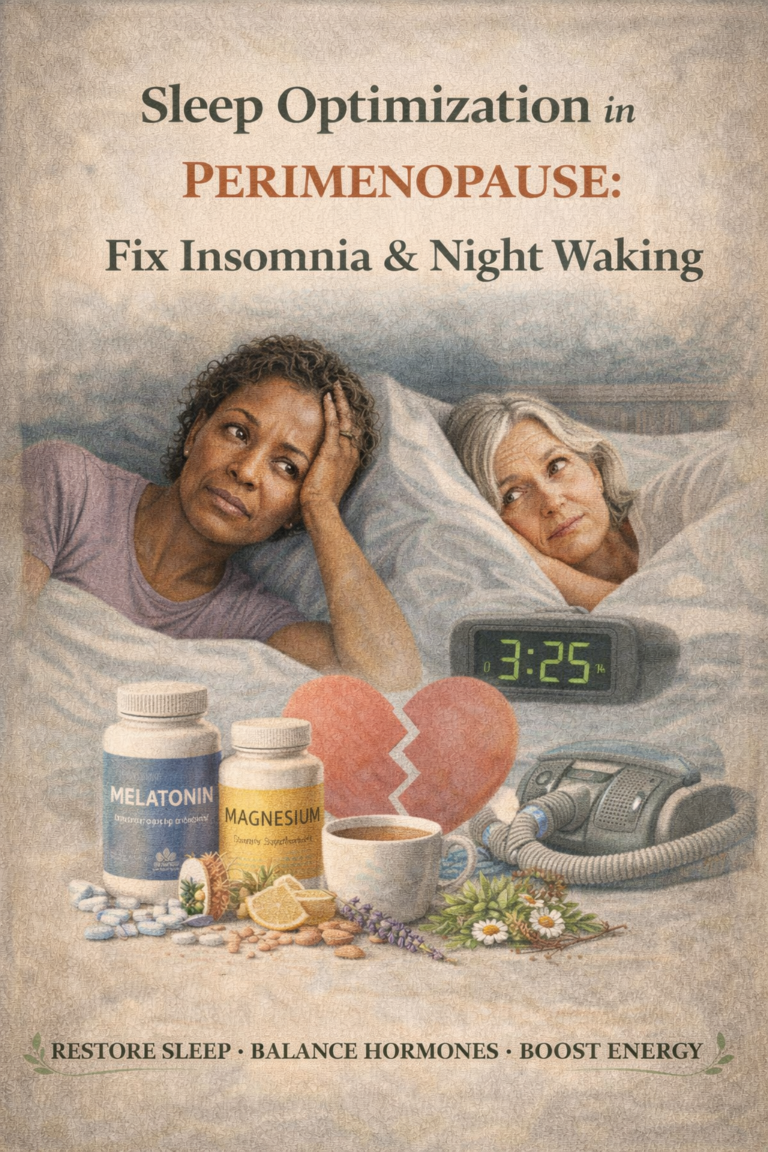
She was scrolling late at night again.
Another night of broken sleep. Another day of brain fog, irritability, and feeling like her body no longer followed the rules it used to. Then she saw it—a post claiming that medicinal mushrooms could help with anxiety, sleep, mood, and even hormone balance during perimenopause and menopause.
Part of her felt hopeful.
Another part of her felt skeptical.
She had already tried so many supplements: adaptogens, magnesium blends, hormone-balancing teas, powders with flashy labels and big promises. Some did nothing. Some made her feel worse. And more than once, she later discovered the product didn’t even contain what the label claimed.
So she wondered:
> Is there actually research behind mushrooms for perimenopause and menopause—or is this just another wellness trend?
Let’s break it down—clearly, honestly, and backed by science.
—
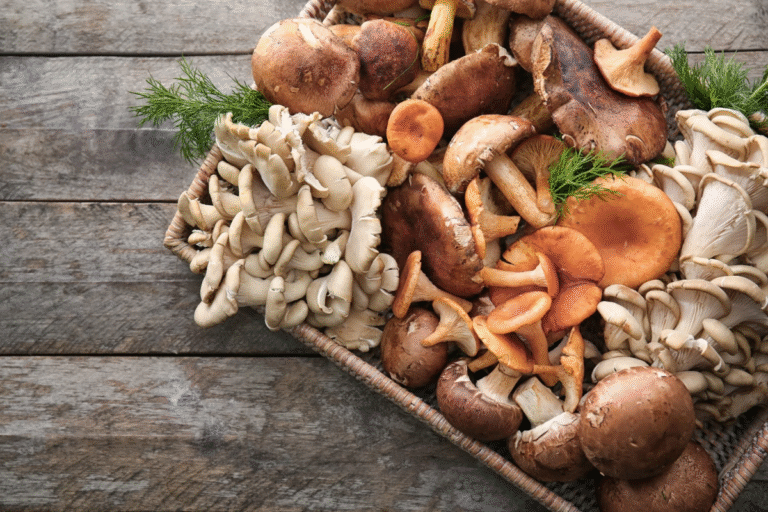
What Are “Medicinal Mushrooms,” Exactly?
Medicinal mushrooms are not new.
They have been used for thousands of years in traditional medical systems including:
Traditional Chinese Medicine (TCM)
Japanese Kampo medicine
Indigenous healing traditions across Asia, Europe, and the Americas
Historically, mushrooms were used not as quick fixes, but as long-term supportive therapies—to enhance resilience, restore balance, and support the body’s stress response, immune function, and vitality.
How mushrooms are used today
In modern medicine and research, mushrooms are studied for their:
Beta-glucans (immune-modulating polysaccharides)
Neurotrophic compounds (supporting brain and nerve health)
Adaptogenic properties (supporting stress resilience)
Anti-inflammatory and antioxidant effects
Importantly:
👉 These are biologically active compounds, not inert “superfoods.”
—
Why Are Mushrooms Being Talked About for Perimenopause and Menopause?
Perimenopause and menopause are characterized by:
Fluctuating and declining estrogen and progesterone
Increased nervous system sensitivity
Changes in sleep architecture
Mood instability and anxiety
Cognitive changes (“brain fog”)
Increased inflammation and metabolic shifts
Mushrooms are not hormone replacement.
But some may support systems affected by hormonal change, particularly:
The brain
The stress response (HPA axis)
Sleep-wake regulation
Immune and inflammatory balance
—
What Does the Research Actually Say?
Lion’s Mane (Hericium erinaceus): The Most Relevant Human Data
Lion’s mane currently has the strongest menopause-adjacent evidence.
A small randomized, placebo-controlled study in menopausal women showed improvements in:
Anxiety and depressive symptoms
Sleep quality
Subjective menopausal complaints
The intervention lasted 4 weeks using lion’s mane fruiting body powder.
Lion’s mane is also studied for:
Neuroplasticity
Nerve growth factor (NGF) stimulation
Cognitive support
Potential relevance for women experiencing:
Brain fog
Anxiety
Mood changes
Stress-related sleep disruption
> This is not definitive evidence—but it is promising and biologically plausible.
—
Reishi (Ganoderma lucidum): Stress and Sleep—With Caution
Reishi has a long history of use for:
Sleep support
Stress reduction
Immune modulation
However:
There are no strong clinical trials specifically for menopause symptoms
Rare cases of liver injury have been reported with some reishi supplements
This doesn’t mean reishi is “bad”—but it does mean it should be used:
Thoughtfully
At appropriate doses
With medical oversight, especially in women with liver concerns or polypharmacy
—
Other Mushrooms (Turkey Tail, Cordyceps, Chaga, Maitake)
These mushrooms are being studied for:
Immune health
Metabolic support
Cancer-adjunctive care
But:
They do not currently have evidence supporting menopause symptom relief
Their use should be individualized and goal-specific
—
Where the Evidence Is Lacking (and Why That Matters)
Let’s be clear:
There are no large-scale, long-term clinical trials on mushrooms specifically for perimenopause or menopause
Many claims online are extrapolated from:
Animal studies
Non-menopausal populations
Traditional use without modern validation
This doesn’t mean mushrooms are ineffective—it means we must be honest about what we know and what we don’t.
—
Powders vs Extracts: Are They the Same?
Short answer: No.
Whole mushroom powders
More food-like
Lower concentration of active compounds
Require higher doses
Extracts (hot water, alcohol, or dual-extracted)
More concentrated
Better bioavailability of specific compounds
Quality varies dramatically
⚠️ Many products use mycelium grown on grain, which may be high in starch and low in medicinal compounds.
Label transparency matters more than branding.
—
Important Precautions (Please Read This)
Medicinal mushrooms:
Are not benign
Can interact with:
Blood thinners
Immunosuppressants
Diabetes medications
Other supplements
May be inappropriate for women with:
Liver disease
Autoimmune conditions
Complex medication regimens
👉 Always consult your medical provider before adding medicinal mushrooms.
These are not “just supplements.”
They have pharmacologic effects.
—
A Case Example from Antigravity Wellness
A woman came to us overwhelmed.
She had:
Tried 12+ supplements
Spent hundreds of dollars monthly
Seen no consistent improvement
No clear understanding of why her symptoms were happening
Her symptoms weren’t random.
Through comprehensive evaluation—including history, labs, and lifestyle review—we identified:
Dysregulated stress hormones
Poor sleep architecture
Micronutrient deficiencies
Hormonal imbalance requiring targeted support
Instead of adding more supplements, we:
Removed what wasn’t helping
Addressed root causes
Built a simple, strategic plan
Introduced only what was appropriate, monitored, and evidence-informed
Her symptoms improved—not because of a “magic mushroom,” but because the right tools were used for the right reasons.
—
About Antigravity Wellness
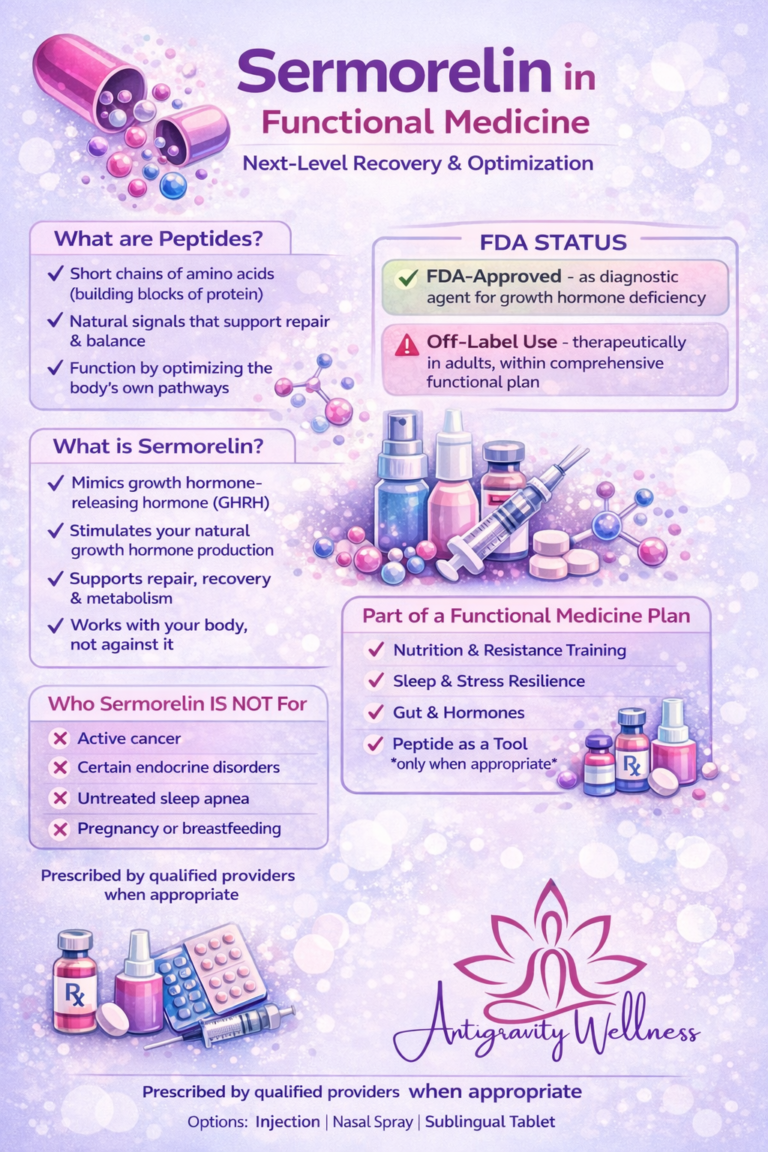
At Antigravity Wellness, we specialize in:
Perimenopause and menopause care
Root-cause evaluation
Evidence-based hormone optimization
Thoughtful use of supplements when appropriate
Ongoing monitoring and simplification—not overwhelm
We don’t chase trends.
We build sustainable, personalized care plans.
👉 Take our Readiness Questionnaire to see if we’re a good fit.
—
References
1. Nagano M, et al. Reduction of depression and anxiety by 4 weeks Hericium erinaceus intake. Biomedical Research, 2010. https://pubmed.ncbi.nlm.nih.gov/20834180/
2. Mori K, et al. Improving effects of Hericium erinaceus on mild cognitive impairment. Phytotherapy Research, 2009. https://pubmed.ncbi.nlm.nih.gov/18844328/
3. National Institutes of Health (NIH). LiverTox Database: Ganoderma lucidum. https://www.ncbi.nlm.nih.gov/books/NBK92757/
4. Wasser SP. Medicinal mushroom science: history, current status, future trends. International Journal of Medicinal Mushrooms, 2014. https://pubmed.ncbi.nlm.nih.gov/25179726/
5. Sullivan R, et al. Medicinal mushrooms and cancer therapy. Integrative Cancer Therapies, 2016. https://pubmed.ncbi.nlm.nih.gov/16702701/
—
Medical Disclaimer
This article is for educational purposes only and does not constitute medical advice. Medicinal mushrooms may interact with medications, supplements, and medical conditions. Always consult with a qualified healthcare provider before starting or stopping any supplement or treatment.