

Why Even One Drink Feels Different in Your Late 30s, 40s, and 50s
She woke up on New Year’s Day feeling awful.
Her head was pounding, her heart felt a little “off,” and although she was exhausted, she couldn’t fall back asleep. Her face looked puffy, her anxiety was high, and her cravings were intense. She only had two drinks the night before, but she felt like she had run a marathon.
“I used to bounce back,” she thought. “Why does this feel so different now?”
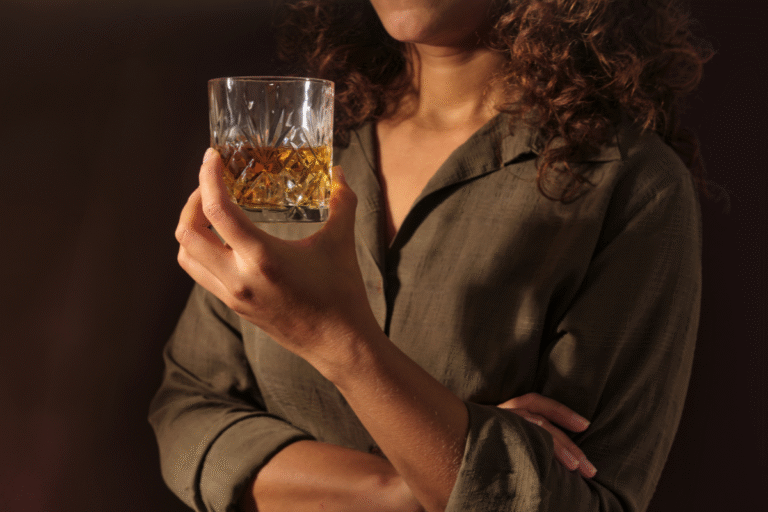
If this sounds familiar, you’re not alone. Women in their late 30s through early 50s often tell me that alcohol hits differently now—and the truth is, it does. This isn’t about suddenly becoming “sensitive” or “unable to handle alcohol.” It’s about physiology. Your midlife hormones, nervous system, and metabolism all process alcohol differently now.
Let’s talk about why this happens and how you can enjoy New Year’s Eve without feeling terrible the next day.
—
Why Alcohol Hits Harder During Perimenopause
Hormones shift dramatically during perimenopause. These changes affect everything from sleep to blood sugar to how your liver metabolizes alcohol.
This is why even one or two drinks can have a stronger impact than they used to.
Alcohol affects:
• Your cortisol (stress hormone)
• Your blood sugar
• Your sleep cycle
• Your hot flashes
• Your digestion
• Your mood and anxiety levels
• Your metabolism
• Your ability to recover
These changes are normal—but understanding them helps you make choices that support your body rather than stress it.
—
What Alcohol Does Inside a Midlife Body (In Simple Terms)
Here’s what’s happening physiologically when you drink:
—
1. Alcohol raises cortisol
Cortisol is your stress hormone.
Alcohol temporarily relaxes you, but once your body processes it, cortisol rebounds and spikes—leading to anxiety, irritability, or restlessness.
This is where “hangxiety” comes from.
—
2. Alcohol disrupts blood sugar
A few hours after drinking, blood sugar drops quickly.
Your body reacts by releasing cortisol and adrenaline, which often wakes you up between 2–3 a.m. with a racing heart or restless mind.
—
3. Alcohol disrupts sleep—even one drink
You may fall asleep faster, but you lose deep, restorative sleep.
This leads to next-day fatigue, brain fog, and mood changes.
—
4. Alcohol worsens hot flashes and night sweats
Alcohol widens blood vessels, increasing heat surges and flushing.
This is amplified in perimenopause.
—
5. Alcohol slows your metabolism
Your liver prioritizes metabolizing alcohol over everything else.
Fat burning, hormone detoxification, and blood sugar regulation all slow down.
—
The 2 a.m. Wake-Up: Explained
One of the most common things women report is suddenly waking up in the middle of the night after drinking.
This is due to:
1. Falling blood sugar
2. A cortisol spike
3. Increased adrenaline
4. Sleep cycle disruption
This combination wakes you up suddenly, often with anxiety or a racing heart.
If this is happening to you, it’s not random. It’s a hormone–alcohol interaction.
—
A Real Case Study: “I Only Had Two Drinks…”
A 44-year-old patient told me:
“I used to be able to drink socially without any problems. Now even two drinks leave me anxious, puffy, and exhausted the next day.”
When we examined her patterns, we discovered:
• She was drinking on an empty stomach
• Her drinks were often sugary
• She continued drinking close to bedtime
• She wasn’t hydrating between drinks
• Her blood sugar was already sensitive
• Her perimenopausal symptoms were increasing
We made a few simple shifts:
• Protein before drinking
• Water between drinks
• Stop drinking at least 3 hours before bed
• Choose clear spirits or champagne
• A bedtime protein snack
• Electrolytes and morning sunlight
She didn’t have to stop drinking altogether—she just needed a hormone-smart strategy.
Today, she celebrates without sacrificing her well-being the next day.
—
Your Hormone-Smart New Year’s Eve Plan
If you choose to drink, you can absolutely enjoy your night while feeling good the next day.
Here’s what helps:
1. Eat protein before drinking
This stabilizes blood sugar and lowers cortisol swings.
2. Choose lower-impact drinks
Clear spirits + soda water, champagne, or a small glass of wine.
3. Avoid sugary cocktails
Sugar intensifies next-day symptoms.
4. Drink water between each drink
This protects your sleep and hydration.
5. Stop drinking 3 hours before bed
This one change dramatically improves sleep quality.
6. Have a protein snack before bed
This prevents the midnight blood sugar crash.
7. The Next Morning
• Hydrate immediately
• Add electrolytes
• Eat protein
• Get outside for natural light
• Take a slow walk to calm cortisol
These small shifts make a big difference.
—
What If You Don’t Want to Drink?
You are not boring.
You’re not “being difficult.”
You’re honoring your body.
Non-alcoholic options have never been better.
Sparkling water, NA champagne, NA cocktails, kombucha, and NA cider are all great options.
Most people won’t even notice—but your body will appreciate it.
—
Download the Alcohol & Hormones Guide
If you want the step-by-step New Year’s Eve survival plan—including morning-after strategies, drink lists, and hormone-friendly swaps—download the free guide here:
—
Ready for Personalized Help?
If alcohol leaves you feeling more emotional, tired, puffy, anxious, or overwhelmed—even when you don’t drink much—it may be time to evaluate your hormones and metabolism more deeply.
The first step is to take our Readiness Questionnaire:
New Patient Readiness Questionnaire
You will receive clear next steps regardless of the results.
—
Medical References
1. Effects of Alcohol on the Endocrine System. https://pmc.ncbi.nlm.nih.gov/articles/PMC3767933/
2. Blood Glucose Level, Alcohol Heavy Drinking and Alcohol Craving during Treatment for Alcohol Dependence. https://pmc.ncbi.nlm.nih.gov/articles/PMC2955866/
3. Sleep, sleepiness, sleep disorders and alcohol use and abuse. https://www.sciencedirect.com/science/article/abs/pii/S1087079201901625
4. Alcohol Consumption Patterns and Risk of Early-Onset Vasomotor Symptoms in Premenopausal Women. https://pmc.ncbi.nlm.nih.gov/articles/PMC9182895/
5. Life stress and cortisol reactivity: An exploratory analysis of the effects of stress exposure across life on HPA-axis functioning. https://pmc.ncbi.nlm.nih.gov/articles/PMC8139339/
—
Medical Disclaimer
This article is for educational purposes only and does not replace medical care. It is not intended to diagnose, treat, or cure any condition. Always consult with a qualified healthcare provider before making changes to your alcohol intake, diet, medications, supplements, or treatment plan.