

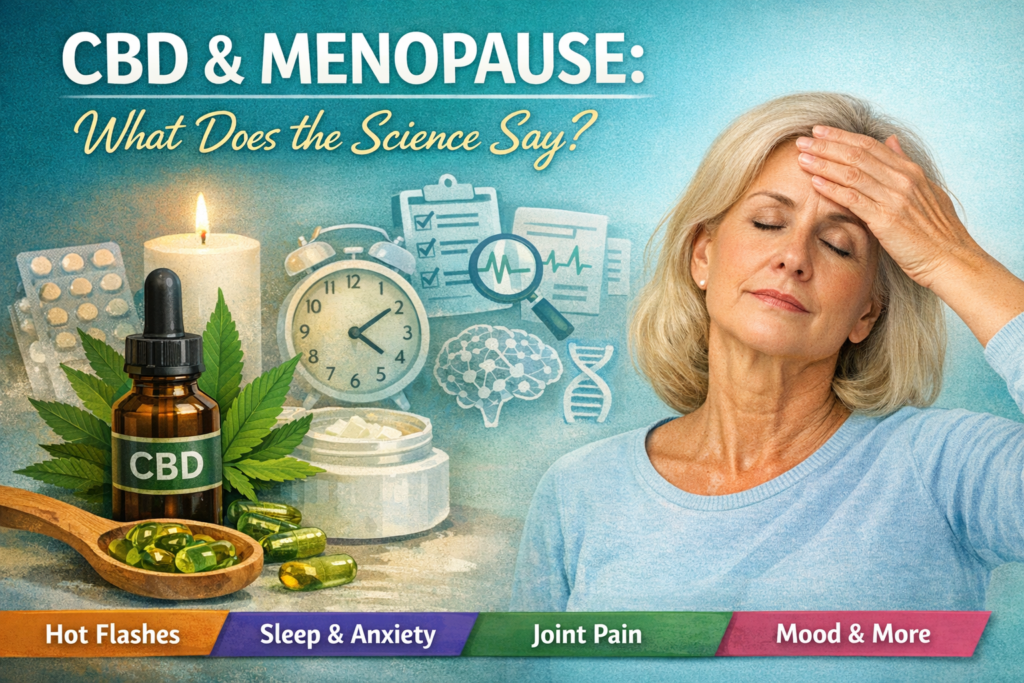
As interest in natural and alternative therapies grows, many women navigating perimenopause and menopause are asking the same question:
Can CBD help with symptoms like anxiety, sleep disruption, hot flashes, and joint pain?
The answer is not a simple yes or no—and that’s exactly why this conversation matters.
Let’s break down what we actually know from current medical research, where CBD may fit, and how to think about it through a functional and evidence-based lens.
—
What Is CBD and How Might It Work?
Cannabidiol (CBD) is a non-psychoactive compound derived from the cannabis plant. Unlike THC, it does not produce a “high.”
CBD interacts with the body’s endocannabinoid system (ECS)—a regulatory system involved in:
Mood and stress response
Sleep cycles
Pain perception
Inflammation
Hormonal signaling
Emerging research suggests that the ECS may play a role in reproductive and hormonal health, making it a potential target during the perimenopause transition.
—
Why Women Are Turning to CBD During Menopause
Despite limited clinical data, real-world use is increasing significantly.
In survey-based studies, up to ~87% of perimenopausal and postmenopausal women report cannabis use at least monthly, often for symptom relief.
Common symptoms targeted include:
Sleep disturbances
Anxiety and mood changes
Joint pain
Hot flashes
However, it’s important to understand:
> High usage does not equal strong evidence.
Many women are turning to CBD because they feel underserved or dismissed—not because the data is definitive.
—
What the Research Shows (Symptom by Symptom)
1. Sleep and Anxiety
There is moderate indirect evidence that CBD may support:
Improved sleep quality
Reduced anxiety
Mechanism:
Interaction with serotonin receptors
Reduction in hyperarousal states
Some studies show improvements in sleep and anxiety in general populations, but menopause-specific data is still limited.
—
2. Pain and Inflammation
Declining estrogen increases systemic inflammation, contributing to:
Joint pain
Muscle aches
CBD has demonstrated anti-inflammatory effects in multiple studies, which may translate to symptom relief in midlife women.
—
3. Mood and Cognitive Symptoms
CBD may influence:
Serotonin signaling
Stress response pathways
This suggests a potential role in:
Mood swings
Irritability
Mild anxiety
However, human menopause-specific trials are lacking.
—
4. Hot Flashes
This is where expectations need to be realistic.
Current data suggests little to no strong evidence that CBD improves vasomotor symptoms (hot flashes).
Most support is anecdotal, not clinical.
—
5. Bone Health (Emerging Research)
A small human study found:
CBD was well tolerated over 12 weeks
Associated with reduced markers of bone turnover
No significant improvements in mood, sleep, or quality of life
This is promising—but far from definitive.
—
6. Vaginal and Genitourinary Symptoms
Early trials are exploring:
CBD-based vaginal suppositories for genitourinary syndrome of menopause
These are still experimental and not yet standard care.
—
The Reality: Research Is Still in Early Stages
Here’s the honest, clinical bottom line:
There are very few large-scale randomized controlled trials
Most data comes from:
Surveys
Animal studies
Small pilot studies
Several ongoing clinical trials—including randomized placebo-controlled studies—are currently investigating cannabinoids for menopause symptoms.
This tells us two things:
1. The medical community sees potential
2. We are not yet at the level of strong clinical evidence
—
Where CBD May Fit in a Treatment Plan
CBD is not a replacement for hormone therapy.
Hormone Replacement Therapy (HRT/MHT) remains:
> The most effective treatment for moderate to severe menopausal symptoms, especially hot flashes and night sweats
However, CBD may have a role as part of a comprehensive plan, especially for women who:
Cannot use hormone therapy
Prefer non-hormonal options
Need additional support for:
Sleep
Stress
Pain
—
Important Safety Considerations
CBD is not risk-free.
Potential concerns include:
Drug interactions (especially liver-metabolized medications)
Variable product quality and dosing
Lack of FDA regulation in many products
This is why clinical guidance matters.
—
The Functional Medicine Perspective
At Antigravity Wellness, we don’t look at CBD as a standalone solution.
We ask:
Why are symptoms happening?
What systems are dysregulated?
What combination of tools will create the best outcome?
A comprehensive plan may include:
Hormone optimization (when appropriate)
Nutrition and metabolic support
Gut and inflammation protocols
Sleep and stress regulation
Targeted supplements (with or without CBD)
—
Your Next Step
If you’re struggling with symptoms of perimenopause or menopause and wondering whether options like CBD—or hormone therapy—are right for you:
At Antigravity Wellness, we specialize in:
Board-certified menopause care
Functional and integrative medicine
Personalized, root-cause treatment plans
We offer:
Evidence-based hormone therapy (HRT)
Non-hormonal and alternative options
A comprehensive, individualized approach to your health
To see if we’re a good fit for you:
 Take our Readiness Questionnaire and start your journey toward feeling like yourself again.
—
References (Full Text Links)
1. https://pmc.ncbi.nlm.nih.gov/articles/PMC9422771/
3. https://pubmed.ncbi.nlm.nih.gov/37721991/
4. https://clinicaltrials.gov/study/NCT06831916
5. https://clinicaltrials.gov/study/NCT06804889
7. https://pmc.ncbi.nlm.nih.gov/articles/PMC10314536/
8. https://www.nutritionaloutlook.com/view/what-the-science-says-about-cbd-and-menopause
—
Medical Disclaimer
This content is for educational purposes only and is not intended as medical advice, diagnosis, or treatment. CBD and cannabis-derived products are not FDA-approved for the treatment of menopause symptoms. Individual responses vary, and potential risks—including medication interactions—should be discussed with a qualified healthcare provider. Always consult your healthcare provider before starting any new supplement, medication, or therapy.