

Many women are told one of two things when they enter perimenopause or menopause:
“This is just part of aging—deal with it.”
Or, “You can’t take hormones.”
And from there… they’re left thinking they just have to suffer.
That’s not true.
If you cannot, choose not to, or are not ready to use hormone therapy, there are effective, evidence-based non-hormonal options that can significantly improve your quality of life.
At Antigravity Wellness, we take a holistic, individualized approach—starting with foundational health and layering in targeted therapies based on your symptoms, history, and goals.
Let’s walk through the most disruptive menopause symptoms—and what you can do about them without hormones.
—
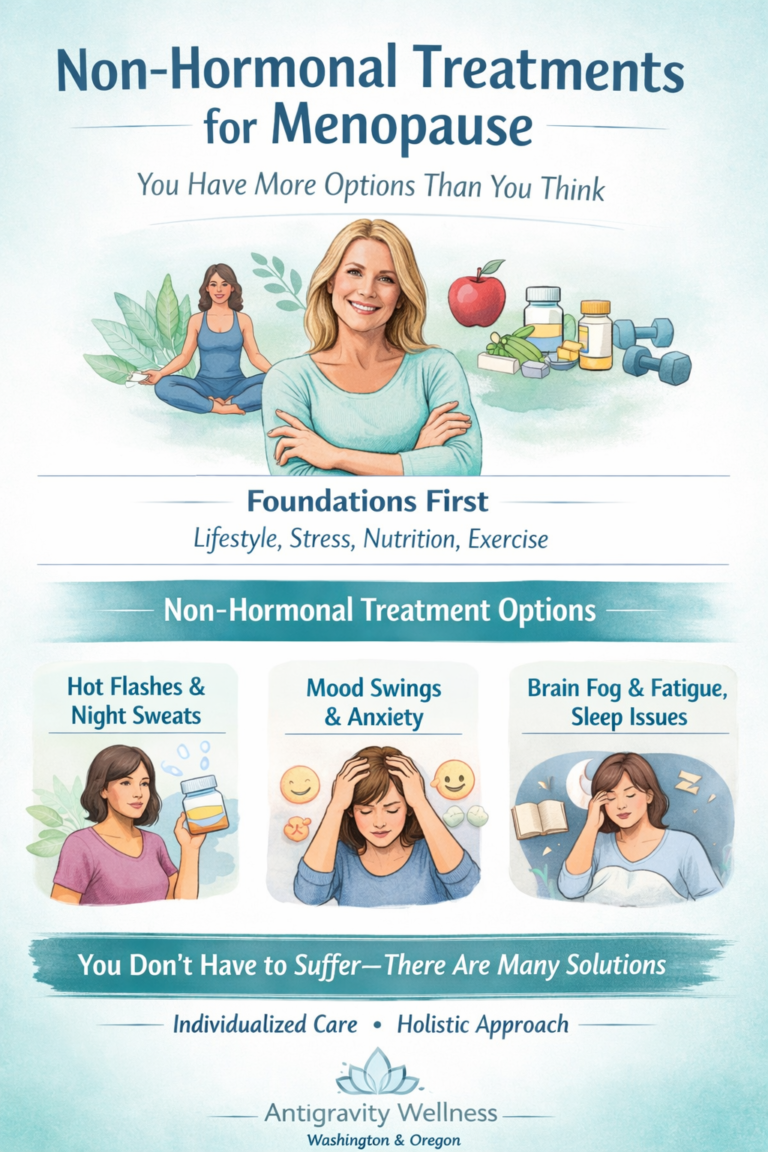
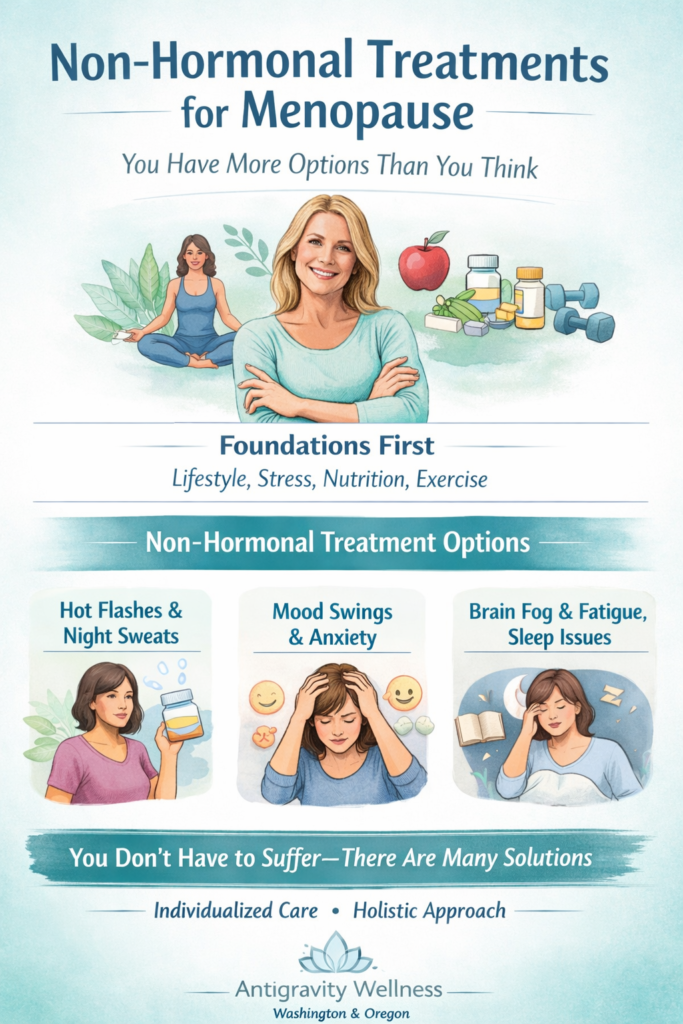
The Foundation First: Where We Always Start
Before medications or supplements, we address the core drivers of symptoms:
1. Lifestyle & Stress Regulation
Chronic stress worsens:
Hot flashes
Sleep disruption
Mood instability
Cortisol dysregulation
Tools we use:
Nervous system regulation (breathwork, mindfulness)
Boundaries and workload management
Sleep-wake rhythm consistency
—
2. Nutrition
Blood sugar instability and inflammation directly impact:
Mood swings
Brain fog
Fatigue
Sleep quality
Key strategies:
Protein-forward meals
Fiber-rich carbohydrates
Healthy fats
Reducing ultra-processed foods and alcohol
—
3. Exercise
Movement is one of the most powerful “non-hormonal therapies” available.
We focus on:
Strength training (muscle = metabolic and hormonal support)
Walking and daily movement
Strategic high-intensity training (when appropriate)
—
Symptom-Based Non-Hormonal Treatment Options
1. Hot Flashes & Night Sweats (Vasomotor Symptoms)
These are often the most disruptive symptoms for women.
FDA-Approved Options
Fezolinetant (Veozah)
First-in-class non-hormonal therapy
Targets the hypothalamus (temperature regulation center)
Specifically designed for menopause-related hot flashes¹
Paroxetine (Brisdelle)
Low-dose SSRI approved for vasomotor symptoms²
—
Off-Label Options (Commonly Used)
SSRIs/SNRIs (e.g., Venlafaxine, Escitalopram)
Gabapentin (especially helpful at night)
Clonidine (less commonly used now)
—
Evidence-Based Supplements
Black cohosh³
Soy isoflavones⁴
Magnesium (for sleep + thermoregulation support)
—
2. Mood Swings, Anxiety & Irritability
Hormonal fluctuations directly affect neurotransmitters like serotonin and dopamine.
Non-Hormonal Medical Options
SSRIs (e.g., Sertraline, Fluoxetine)
SNRIs (e.g., Duloxetine)
These can:
Stabilize mood
Reduce anxiety
Improve resilience to stress
—
Additional Support
Cognitive Behavioral Therapy (CBT)⁵
Adaptogens (ashwagandha, rhodiola)
Omega-3 fatty acids
—
3. Brain Fog & Fatigue
This is one of the most frustrating and under-discussed symptoms.
What’s Driving It?
Sleep disruption
Insulin resistance
Cortisol imbalance
Nutrient deficiencies
—
Non-Hormonal Strategies
Medical Options
Address underlying thyroid issues
Treat insulin resistance (e.g., Metformin when appropriate)
—
Supplement Support
Creatine (cognitive + energy support)
B-complex vitamins
Iron (if deficient)
Vitamin D
—
Lifestyle Interventions
Strength training
Morning light exposure
Sleep optimization
—
4. Sleep Disruption
Sleep is foundational—when this is off, everything else worsens.
Non-Hormonal Medical Options
Low-dose Trazodone
Gabapentin (especially if night sweats present)
—
Natural & Behavioral Approaches
Magnesium glycinate
Glycine
Sleep hygiene optimization
Consistent bedtime routine
—
The Bigger Picture: Your Long-Term Health Still Matters
Menopause is not just about symptoms.
It is a metabolic and hormonal transition that increases risk for:
Cardiovascular disease
Osteoporosis
Cognitive decline
Insulin resistance
Even if you are not using hormones, these risks still need to be addressed proactively.
—
You Do Not Have to Suffer
If you’ve been told:
“You can’t take hormones”
“You’re not a candidate”
Or “this is just aging”
Please hear this:
You still have options.
And more importantly—
you deserve support.
At Antigravity Wellness, we:
Start with foundational health
Offer both hormonal and non-hormonal therapies
Customize care to each individual woman
—
Ready for Support?
If you live in Washington or Oregon and want a personalized, evidence-based plan:
Take our Readiness Questionnaire to see if we’re a good fit.
—
References
1. Fraser GL, et al. Efficacy of fezolinetant in menopausal vasomotor symptoms. Lancet. 2020.
https://www.thelancet.com/journals/lancet/article/PIIS0140-6736(20)30649-1/fulltext
2. Simon JA, et al. Low-dose paroxetine for vasomotor symptoms. Menopause. 2013.
3. Leach MJ, Moore V. Black cohosh for menopausal symptoms. Cochrane Review.
https://www.cochranelibrary.com/cdsr/doi/10.1002/14651858.CD007244.pub2/full
4. Taku K, et al. Soy isoflavones and hot flashes. Menopause.
https://journals.lww.com/menopausejournal/Fulltext/2012/08000/Effects_of_soy_isoflavones_on_hot_flashes.2.aspx
5. Hunter MS, et al. CBT for menopausal symptoms. Menopause.
—
Medical Disclaimer
This content is for educational purposes only and is not intended to diagnose, treat, or replace medical advice. Always consult with a qualified healthcare provider before starting or changing any treatment plan. Individual needs and risks vary, and care should be personalized accordingly.